


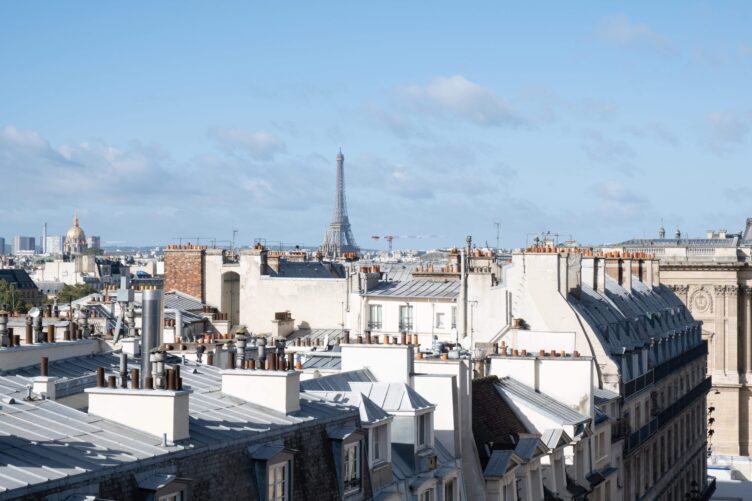


On a weekday morning in Paris, before the crowds reach the riverbank, you can watch the bouquinistes unlock their green boxes along the Seine. This is a ritual that has repeated, in one form or another, for more than four hundred years.
Booksellers were already trading along these quays before the Eiffel Tower was built and before Haussmann reshaped Paris with his grand boulevards. Their customers today even come from countries that did not exist when they first set up shop. When Olympic security planning threatened to move them in 2024, the President of France personally intervened. In Paris, it turns out, booksellers outrank logistics.
That morning ritual is the perfect introduction to the world of literary tourism and how it has grown into a popular trend. It’s a way of exploring Europe that has evolved into a movement. The idea is simple: instead of organizing a trip around monuments and museums, you organize it around the culture of the book.
Imagine the bookshop that has anchored a neighbourhood for seventy years. The library that requires an oath of its readers. The Welsh market town that holds ten million second-hand volumes, or the Norwegian village you could only get to by boat until 1986, that has more books than people.
When you travel this way, you realize these places are rarely just shops or archives. They are where a city keeps its memory — and where visitors and locals still meet on equal terms, as readers. You don’t need special knowledge to start. You need a spare corner of your luggage, and a willingness to let a bookseller redirect your afternoon.
These twelve destinations are where to begin.
Europe’s Best Literary Destinations
1. Paris, France

Start your time in Paris where most literary pilgrims do: at Shakespeare and Company, the English-language bookshop facing Notre-Dame from the Left Bank, housed in a 17th-century former monastery. Its late founder, George Whitman, called himself the frère lampier — the friar who lights the lamps — and ran the shop on a principle painted above one doorway: “Be not inhospitable to strangers, lest they be angels in disguise.” He meant it as policy.

Since 1951, an estimated 30,000 young writers, known as Tumbleweeds, have slept in beds tucked between the shelves. In exchange for their stay, they work a few hours, read a book each day, and leave behind a one-page autobiography for the archive.

Be aware that Shakespeare and Company can be crowded; the antidote is the river itself. The green boxes of les bouquinistes stretch for some three kilometres along the Seine, and browsing them — vintage paperbacks, prints, back issues of Paris Match — remains one of the city’s great free pleasures.

After that, you can head indoors to witness the Bibliothèque nationale de France’s Richelieu site, which has recently reopened after a long restoration. Its oval reading room is among the finest in Paris, while the Maison de Victor Hugo, the author’s former apartment on the Place des Vosges, is a great writer’s house museum on one of the world’s most beautiful squares.
2. London, England

When you touch down in London, the British Library should be your first stop, and it deserves to be. Its permanent treasures gallery holds the Magna Carta, a notebook of Leonardo da Vinci’s and the Beatles’ handwritten lyrics—all within a few steps of one another. Together, they represent roughly a thousand years of recorded thought in a single free-to-enter room beside St Pancras station.

From there, the trail leads into smaller spaces. Cecil Court, a short pedestrian lane off Charing Cross Road, houses around twenty antiquarian and specialist dealers behind Victorian shopfronts. An eight-year-old Mozart lodged here in 1764, and the lane is popularly credited as an inspiration for Harry Potter’s Diagon Alley.

In Marylebone, Daunt Books occupies a galleried Edwardian shop lit by a long skylight, and organizes its travel section by country. Guide books, historical texts and novels are shelved together, on the sensible theory that fiction tells you as much about a place as any map.

Complete the circuit with the Charles Dickens Museum in Bloomsbury. This is the famed author’s only surviving London home. For those who enjoy a blur of fact and fiction, the Sherlock Holmes Museum is at what claims to be 221B Baker Street.

3. Oxford, England
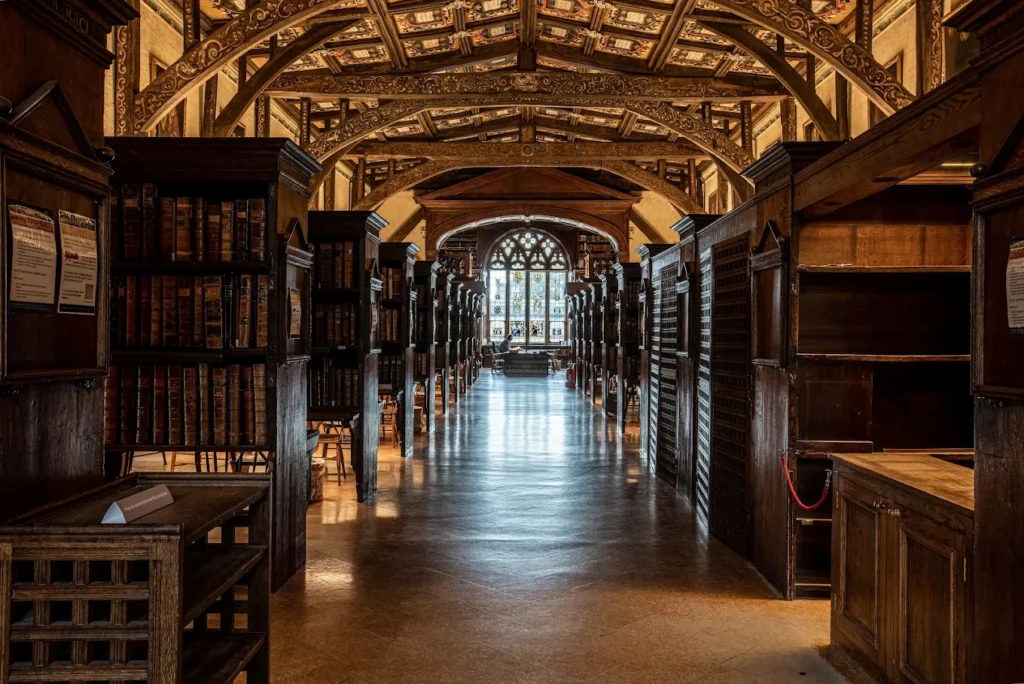
Readers admitted to the Bodleian Library have for centuries sworn a formal declaration that includes a promise not to “kindle flame” within its walls — a vow written for the candlelit age and never retired. Duke Humfrey’s medieval reading room, with its painted ceiling and chained-book heritage, doubled as the Hogwarts library on film.

The Radcliffe Camera next door, a domed rotunda in honey-coloured stone, is the building that appears on virtually every photograph of the city.

Oxford’s bookshops are just as exciting as its libraries. Beneath Blackwell’s modest shopfront on Broad Street lies the Norrington Room, an underground hall holding miles of shelving, excavated beneath the neighbouring college in the 1960s.

Opposite Christ Church stands Alice’s Shop, a tiny store that Lewis Carroll wrote into Through the Looking-Glass as the Old Sheep Shop. The real Alice Liddell bought barley sugar from this very shop.
4. Edinburgh, Scotland

When UNESCO created its Cities of Literature programme in 2004, Edinburgh was the first city to be named. It was a recognition of a place that produced Burns, Scott, Stevenson, Conan Doyle, Spark, and Rankin, and built its skyline accordingly.
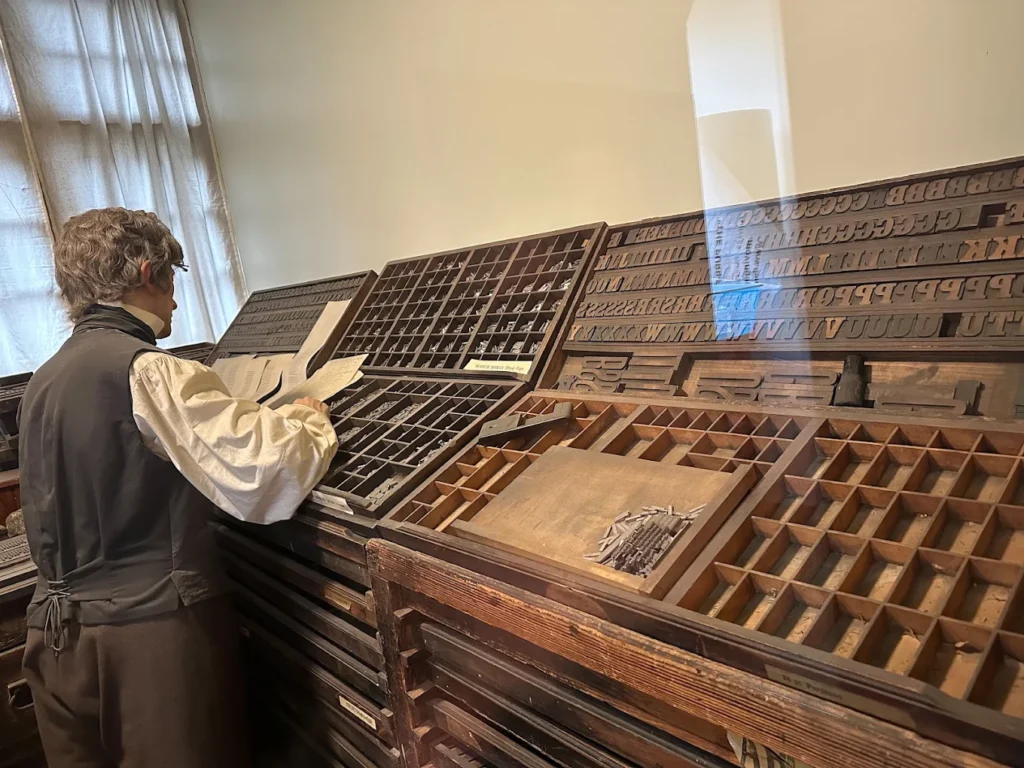
The Scott Monument on Princes Street, a blackened Gothic spire 287 steps high, is thought to be the largest monument to a writer anywhere in the world. The climb is well worth it, as is taking a moment to consider that a city chose to spend money from a cathedral on a novelist.

The Writers’ Museum, in a 17th-century house off the Royal Mile, covers the big three — Burns, Scott and Stevenson — while the surrounding Old Town supplies the atmosphere. The agreeable chaos of Armchair Books in the West Port, and Greyfriars Kirkyard, where a headstone bearing the name Thomas Riddell is said to have lodged in the mind of a young J.K. Rowling, then writing in cafés a few streets away.

5. Prague, Czech Republic

Prague’s literary landmarks fall into two categories: Kafka’s city and the city of its historic libraries, and both repay attention. The Klementinum, a former Jesuit complex near Charles Bridge, contains a Baroque library hall completed in 1722 that regularly ranks among the great reading rooms in the world. Its frescoed ceiling and gilded globes can be viewed only from a roped doorway, which has done nothing to diminish its fame.

Across the Vltava river and up the city’s hills, the Strahov Monastery Library offers two halls separated by a century. These include the dark, carved Theological Hall of the 1670s and the neoclassical Philosophical Hall of 1794. Together, their collections contain roughly 200,000 volumes.
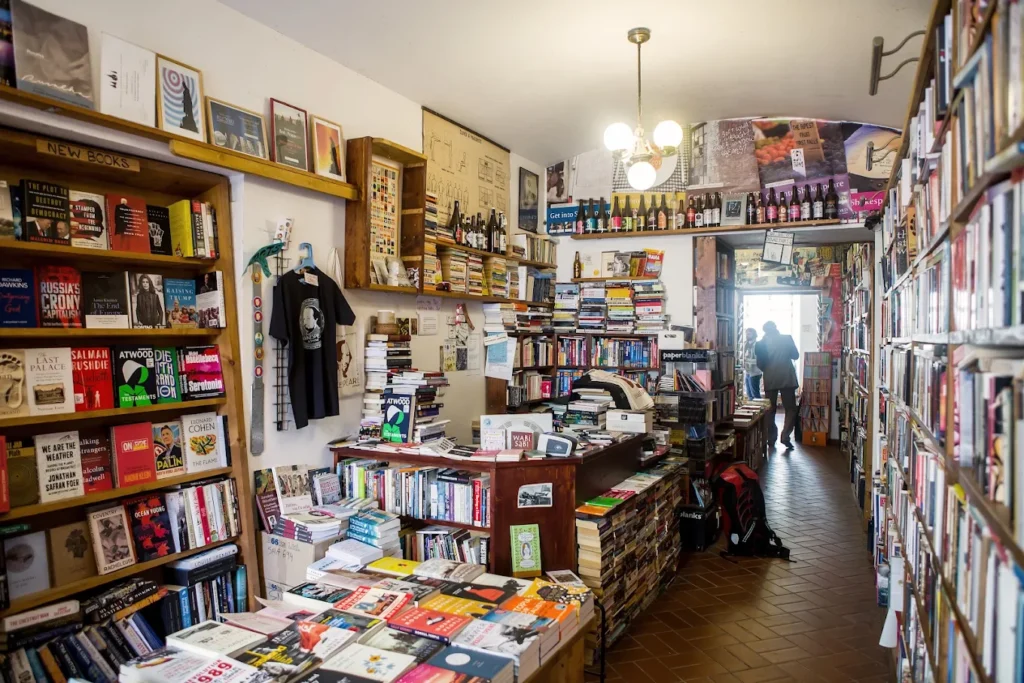
Between them sits a genuine cabinet of curiosities, with preserved sea creatures among the encyclopaedias, a reminder that early libraries set out not just to collect books, but the entire world. End your visit at Shakespeare a synové (“Shakespeare and Sons”), a much-loved English- and Czech-language bookshop near the Charles Bridge.
6. Venice, Italy

Libreria Acqua Alta — “the bookshop of high water” — is what happens when a bookseller decides to negotiate with the lagoon rather than fight it. Owner Luigi Frizzo stores his stock in bathtubs, waterproof crates and a full-sized gondola parked in the middle of the shop. A staircase built from flood-ruined books climbs to a canal view; cats patrol the stacks; and a back door opens directly onto the water. It is chaotic, mildly damp and entirely wonderful.
It is also, historically, the right city for it. From around 1494, the printer Aldus Manutius ran his Aldine Press in Venice and over the course of his career, invented italic type, established the modern use of the semicolon, and pioneered cheap, small-format editions of the classics — the direct ancestors of the paperback. His printer’s mark was a dolphin curled around an anchor; his motto: festina lente, make haste slowly. His radical idea at the time was that a book should fit in a pocket rather than be chained to a lectern.

To see where that idea led, visit the Biblioteca Nazionale Marciana on Piazza San Marco and the quiet, art-filled Fondazione Querini Stampalia.

7. Óbidos, Portugal
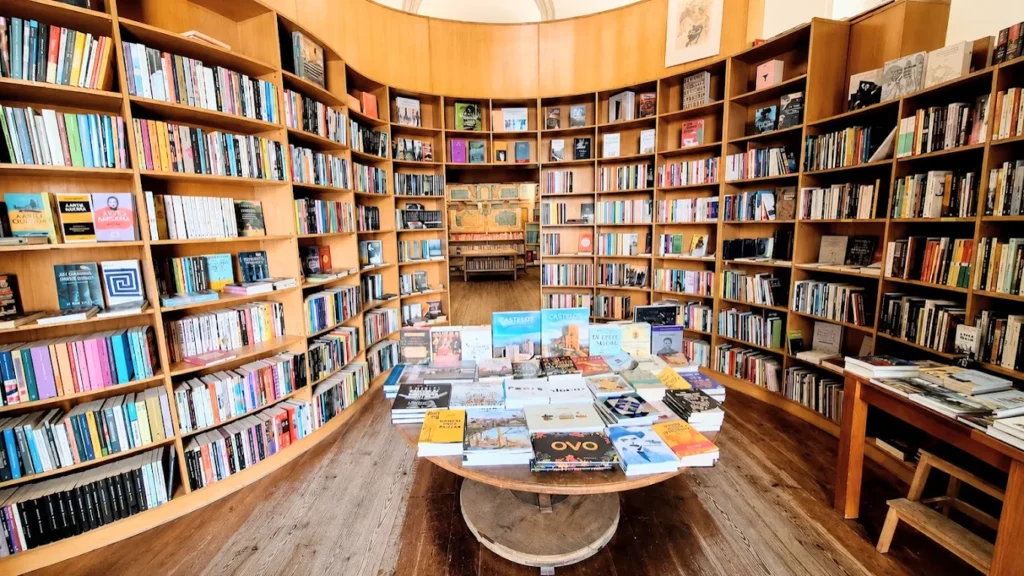
An hour north of Lisbon, the walled village of Óbidos, filled with whitewashed lanes, bougainvillaea, and a castle, has spent the past decade converting its disused buildings into bookshops. This effort was recognized in December 2015 when UNESCO named it a Creative City of Literature. The results are strange. At Livraria de São Tiago, books are shelved through a Gothic church, stacked where altars once stood. At The Literary Man Óbidos Hotel, you’ll find a former convent where guests sleep surrounded by a collection of tens of thousands of volumes.
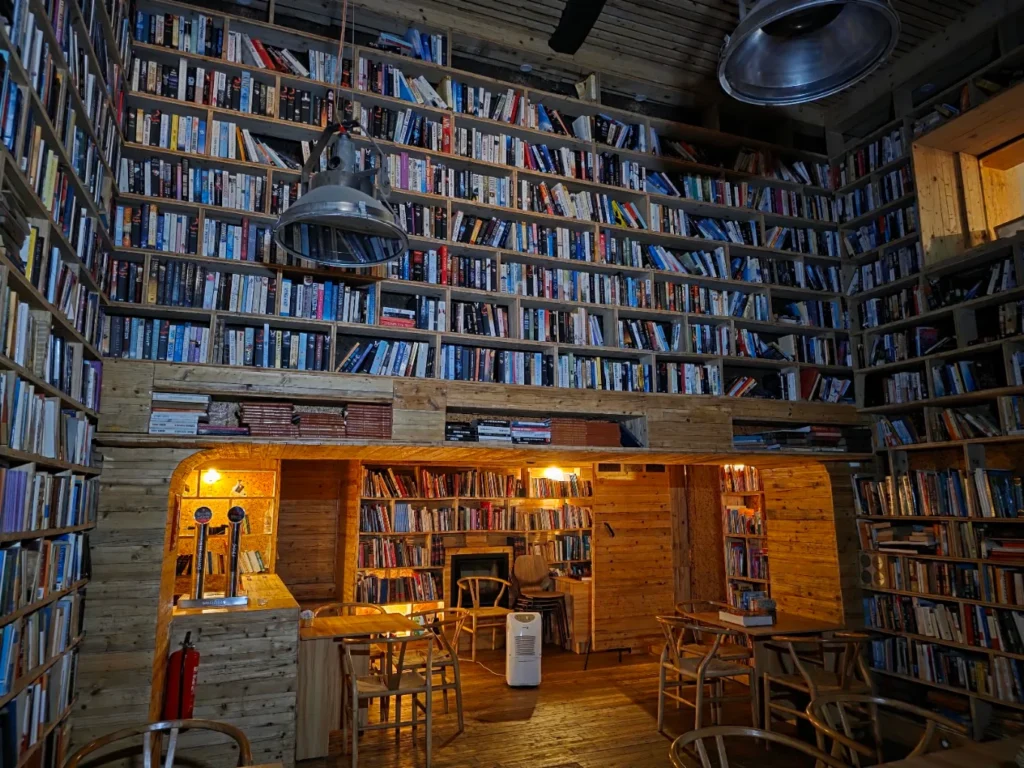
The project’s origin has the shape of a fable: a bookseller agreed to take on the church only if the town committed to keep turning its neglected spaces over to books. The town kept its side of the bargain, and discovered that literature, treated as infrastructure, could carry a village into its second act.
8. Hay-on-Wye, Wales
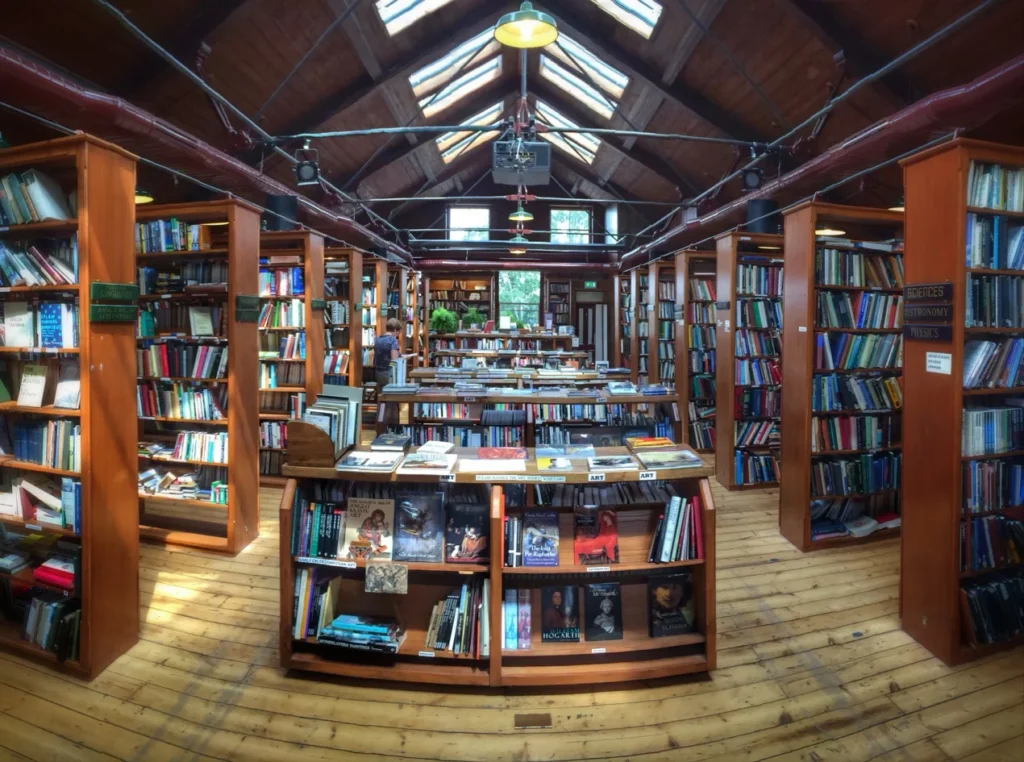
The world’s first “book town” was, by any reasonable account, one man’s elaborate joke that got out of hand. Richard Booth opened his first second-hand bookshop in Hay in the early 1960s and began buying stock by the container-load. On the 1st of April 1977 he declared the town an independent kingdom, crowned himself king, issued passports from the local pubs and appointed his horse Prime Minister. The world’s press arrived to cover the stunt and left having discovered the books, and Hay never looked back.

Today this town of roughly 1,500 people on the Welsh–English border features an estimated 10 million volumes. Richard Booth’s Bookshop remains the flagship; Hay Castle runs honesty shelves in its grounds; Murder and Mayhem deals exclusively in crime.
.jpg)
Each spring the Hay Festival — “the Woodstock of the mind,” in Bill Clinton’s much-quoted phrase draws writers and readers by tens of thousands. The next event will be held from the 27th of May to the 6th of June 2027.
9. Wigtown, Scotland

Scotland’s National Book Town since 1998, Wigtown, with a population in the hundreds and bookshops in the double figures, sits in the soft farmland of Galloway, well off most itineraries, which is part of its appeal. Its defining institution is The Open Book: a functioning bookshop with a flat upstairs that visitors can rent for a week at a time. You get to run the shop yourself, pricing stock, minding the till, recommending novels to strangers. It is booked out years ahead, for the sensible reason that it is many readers’ dream made rentable.

Down the main street, The Book Shop — Scotland’s largest second-hand bookstore — belongs to Shaun Bythell, whose caustic Diary of a Bookseller turned the daily realities of the trade into an international bestseller.
Be sure to also stop by the warmly named café-bookshop ReadingLasses, and time a visit for the Wigtown Book Festival, which runs from the 25th of September to the 4th of October 2026. The traditional opening is with a bagpipe procession and fireworks.
10. Montolieu, France
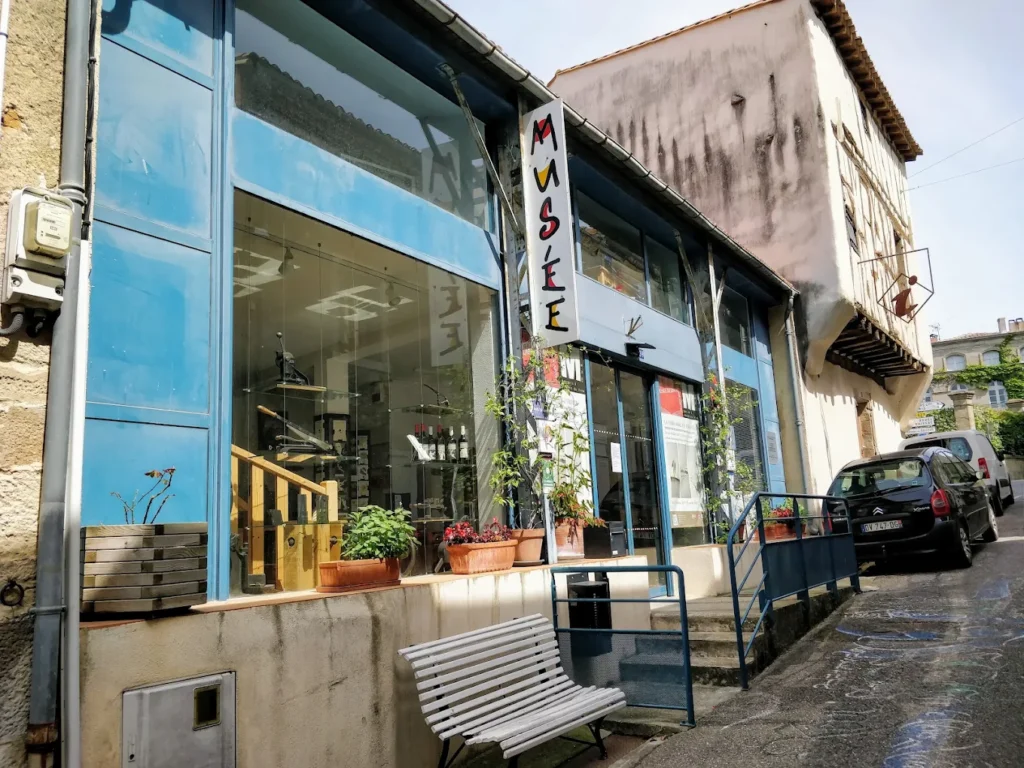
In the hills northwest of Carcassonne, Montolieu is what happens when a village stakes its future not just on selling books but on making them. The bookbinder Michel Braibant established the “village of books” in 1990 and opened its Museum of Book Arts and Crafts the following year.
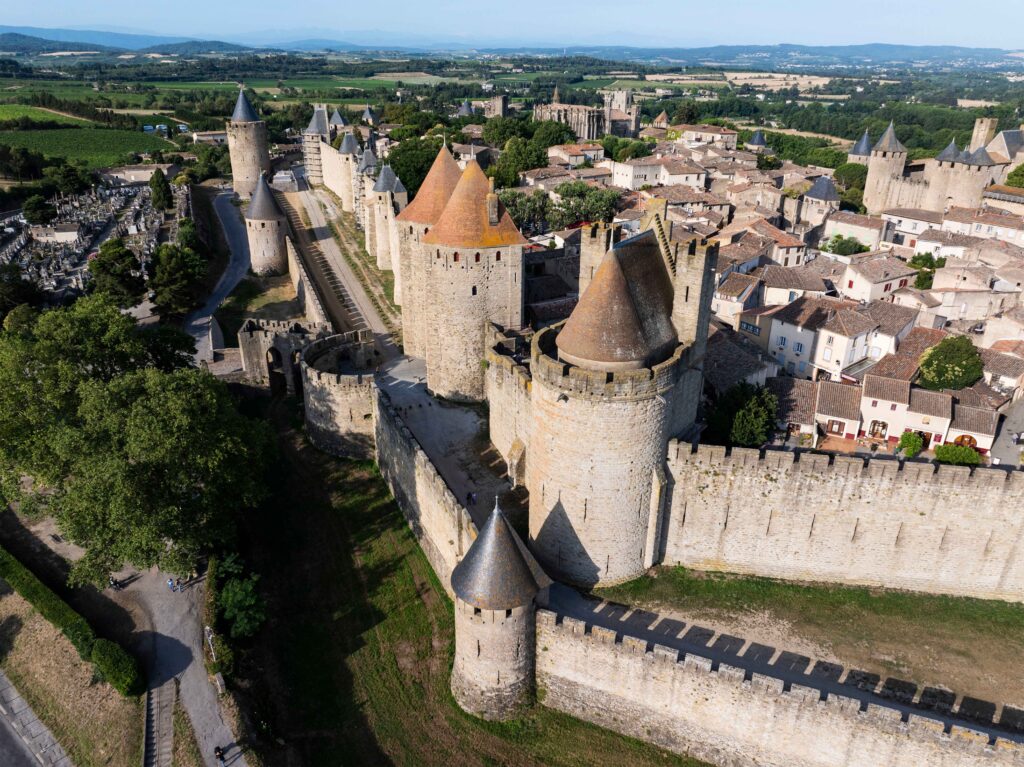
Today some fifteen bookshops line the narrow lanes alongside working binders, calligraphers and engravers, and the last operating paper mill in Occitanie still turns nearby. It is one of the few places in Europe where the full craft of the book, paper, ink, binding, type, survives as a living trade rather than a museum display. The ramparts of medieval Carcassonne, twenty minutes away, are the perfect way to end the day.
11. Budapest, Hungary

Budapest’s best-kept literary secret is a public library. The Szabó Ervin Library occupies the neo-Baroque Wenckheim Palace. Past its ordinary lending floors lie the palace’s original state rooms — gilded salons, carved spiral staircases, chandeliers — now furnished with desks and reading lamps. Students queue for seats. A day pass admits visitors, making this one of the cheapest tickets to experience an aristocratic interior anywhere in Europe.

The city’s bookshops carry their own history. Írók Boltja — the “Writers’ Bookshop” — occupies a former literary café on Andrássy Avenue and has served as an institution of Hungarian letters for generations.

Massolit Books & Café takes its name from the fictional writers’ union in Bulgakov’s The Master and Margarita — a sly joke in a region that knows exactly what happens when literature and power share an address. The Petőfi Literary Museum rounds out the picture.

12. Fjærland, Norway
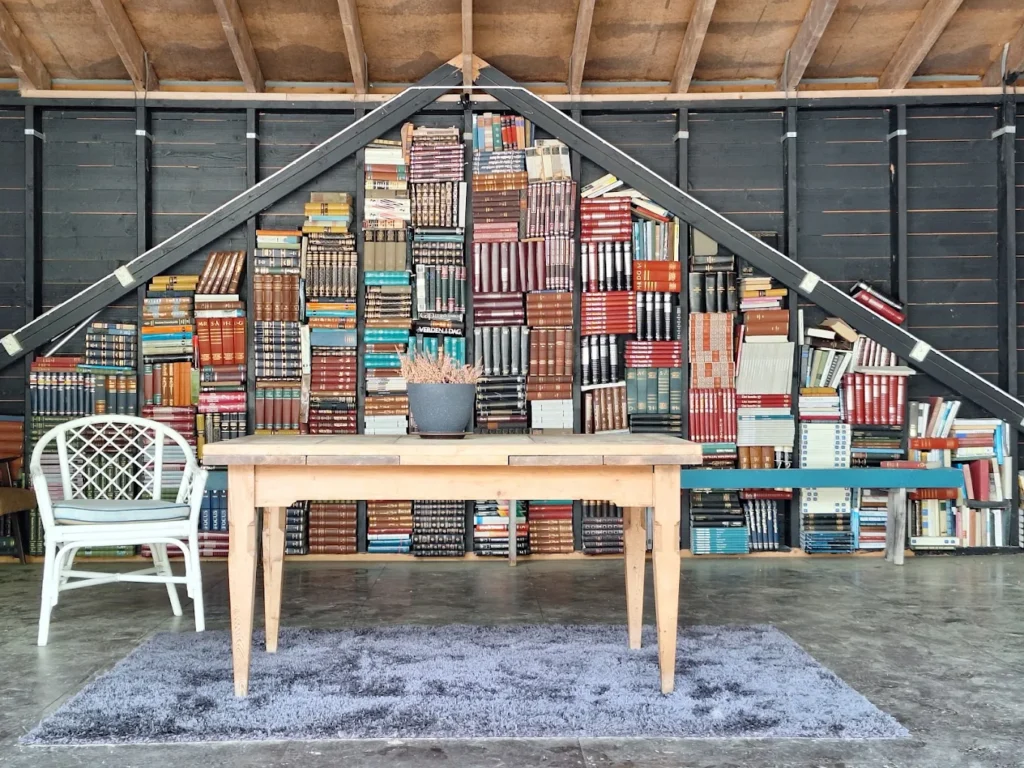
End at the edge of the map, Fjærland sits beneath glaciers on an arm of the Sognefjord; until 1986, it could be reached only by boat. In 1995 it became Norway’s first book town, Den Norske Bokbyen, and today roughly 150,000 second-hand books fill its converted ferry waiting rooms, stables, a bank and a former post office. Some sit on open-air shelves, sold on the honour system. It’s simple: you take a book, leave the money in the box. The arithmetic is often quoted and worth repeating — there are considerably more books here than residents.
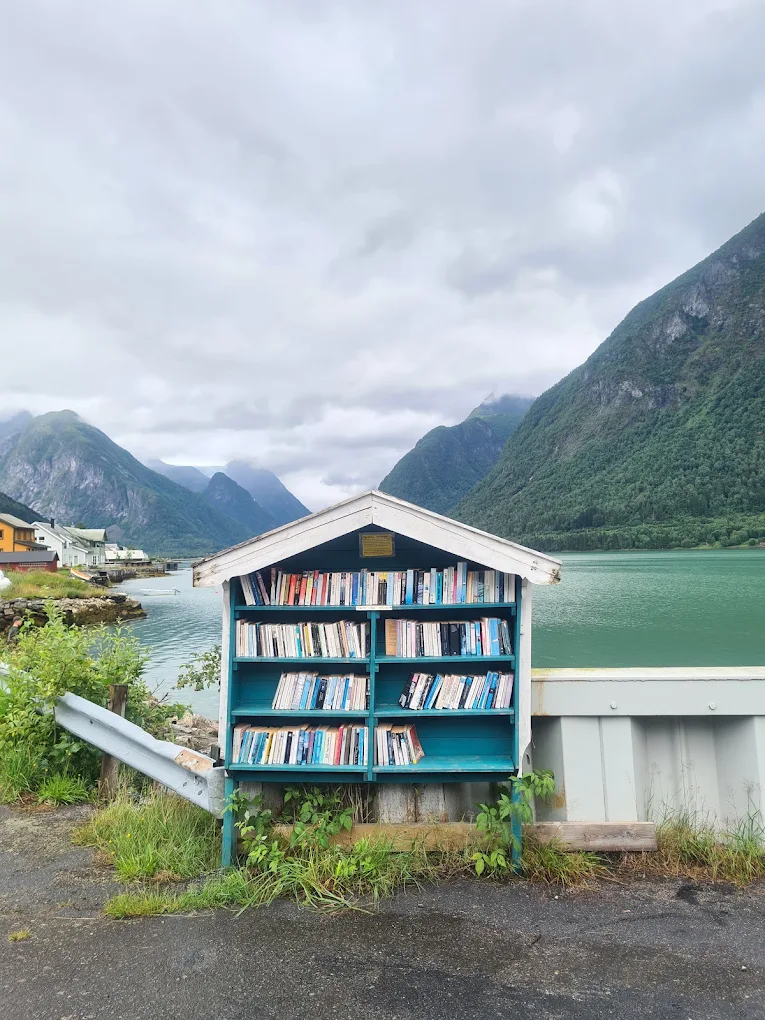
Stay at the Hotel Mundal, a fjord-side landmark since 1891; visit the Norwegian Glacier Museum and walk to the blue ice-fall of Bøyabreen. After eleven cities of reading rooms and crowded shelves, Fjærland offers the thing every reader is ultimately after: a good book, a long silence, and nowhere else to be.

Discover Europe, One Page at a Time
Literary travel asks very little, in the end. Carry a book. Ask the bookseller what's good — they are, everywhere in the world, dying to tell you. Buy the novel set in the place you're standing. It is a slower way through Europe, and a richer one, because a bookshop is the one attraction on any itinerary where you're not a spectator. You're a participant — and you have been since you learned to read.
