





Every great city has a place where its books wash up. Estates are broken, libraries are culled, readers die or move house, and somewhere a dealer with a trestle table catches what falls. Literary tourism starts in places like these: Spend enough time in them, and you learn to read them like weather: the boxes on a Paris quay, the Friday stalls on an Amsterdam square, the shaded courtyard in Istanbul where the trade has continued, in one form or another, since Byzantium.
The path to Hochosterwitz in southern Austria passes through fourteen gates, each a small fortress built between 1570 and 1586 to stop attackers while the defenders at the gates above and below fired down on them. Walk it slowly, and you can read the fear of its patron, Georg Khevenhüller: Ottoman armies advancing through the Balkans.
That’s the useful way to see a castle, but as a record of fear. Every ditch, cliff, and gate answers a question about who was coming and from where. The twenty European castles below are grouped by what each trusted to keep it standing: water, rock, walls, and finally nothing at all, because by then there was nothing left to fear. Those, inevitably, are the ones on the postcards.
Mont Saint-Michel, France
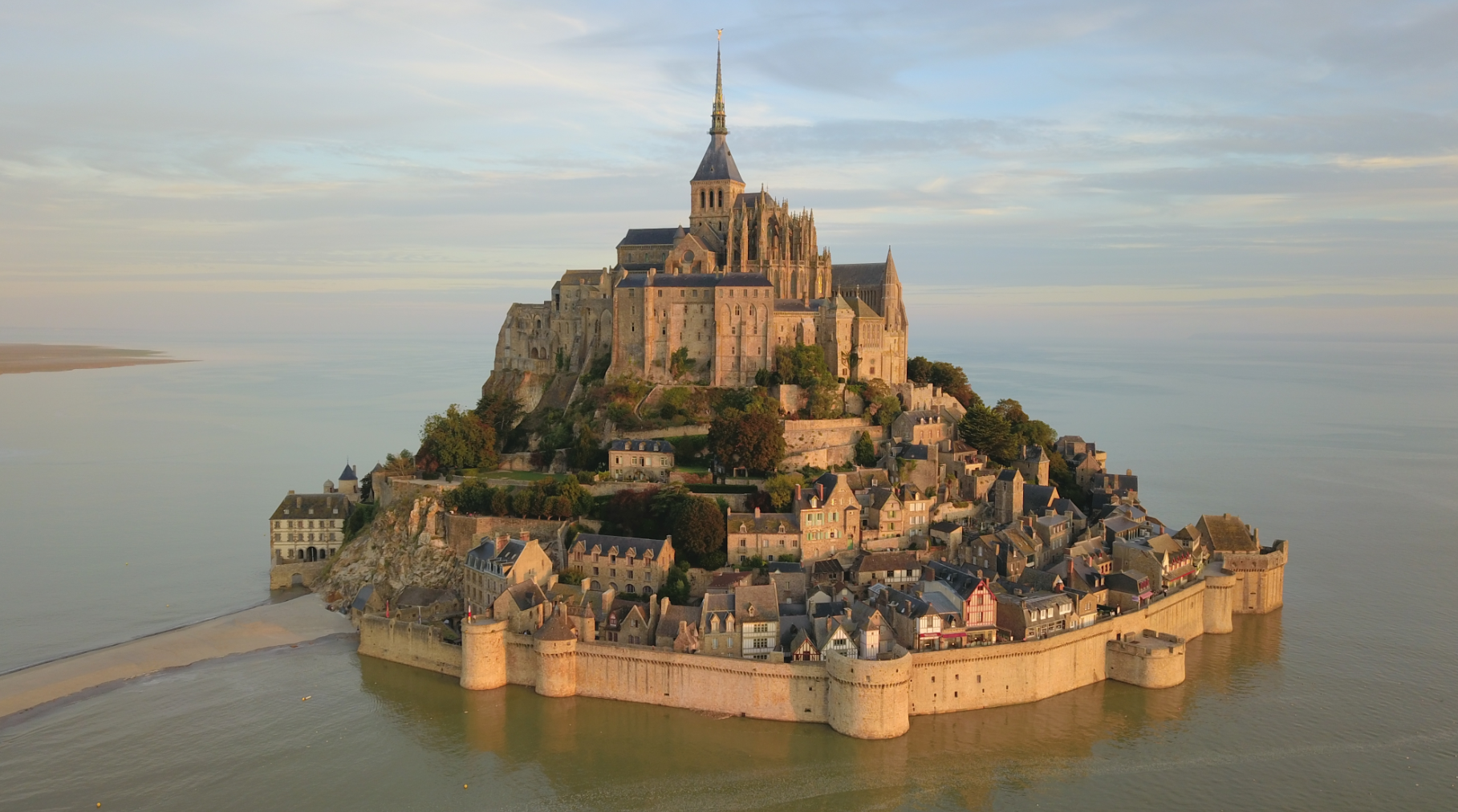
The tide is the garrison. This bay has the highest tidal range in continental Europe, and for most of the Middle Ages the abbey’s defense was simply the schedule of the moon. The English besieged it repeatedly throughout the Hundred Years’ War and never took it. Napoleon, less impressed, ran it as a prison until 1863. A solid causeway built in 1879 slowly choked the bay with sediment, and a bridge finished in 2014 undid the damage. UNESCO listed it in 1979. Watch the water come in, and you understand why pilgrims arrived counting hours rather than miles.
Address: 50170 Le Mont-Saint-Michel, France
St Michael’s Mount, Cornwall
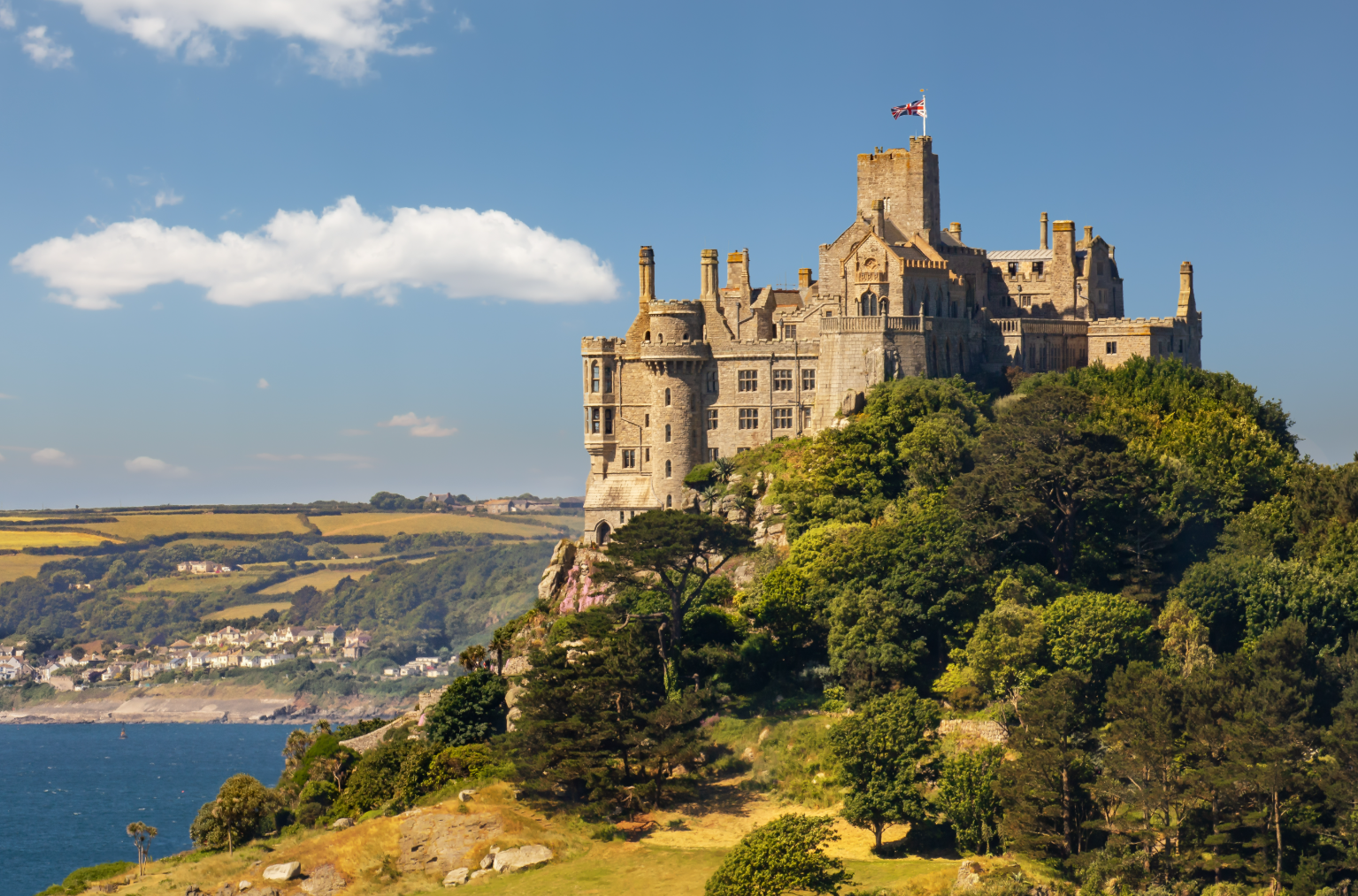
Its twin, and not by coincidence. Around 1044 Edward the Confessor handed this tidal island to the Benedictines of Mont Saint-Michel, who ran it as a priory until Henry V severed the connection in 1414. The St Aubyn family bought it in 1659 and still live there, though the Mount passed to the National Trust in 1954. The cobbled causeway surfaces for about four hours a day. The gardeners here weed the cliff-face garden in abseiling harnesses, fifty meters above the sea.
Address: Harbour View, Marazion TR17 0HS, UK
Château de Chillon, Switzerland
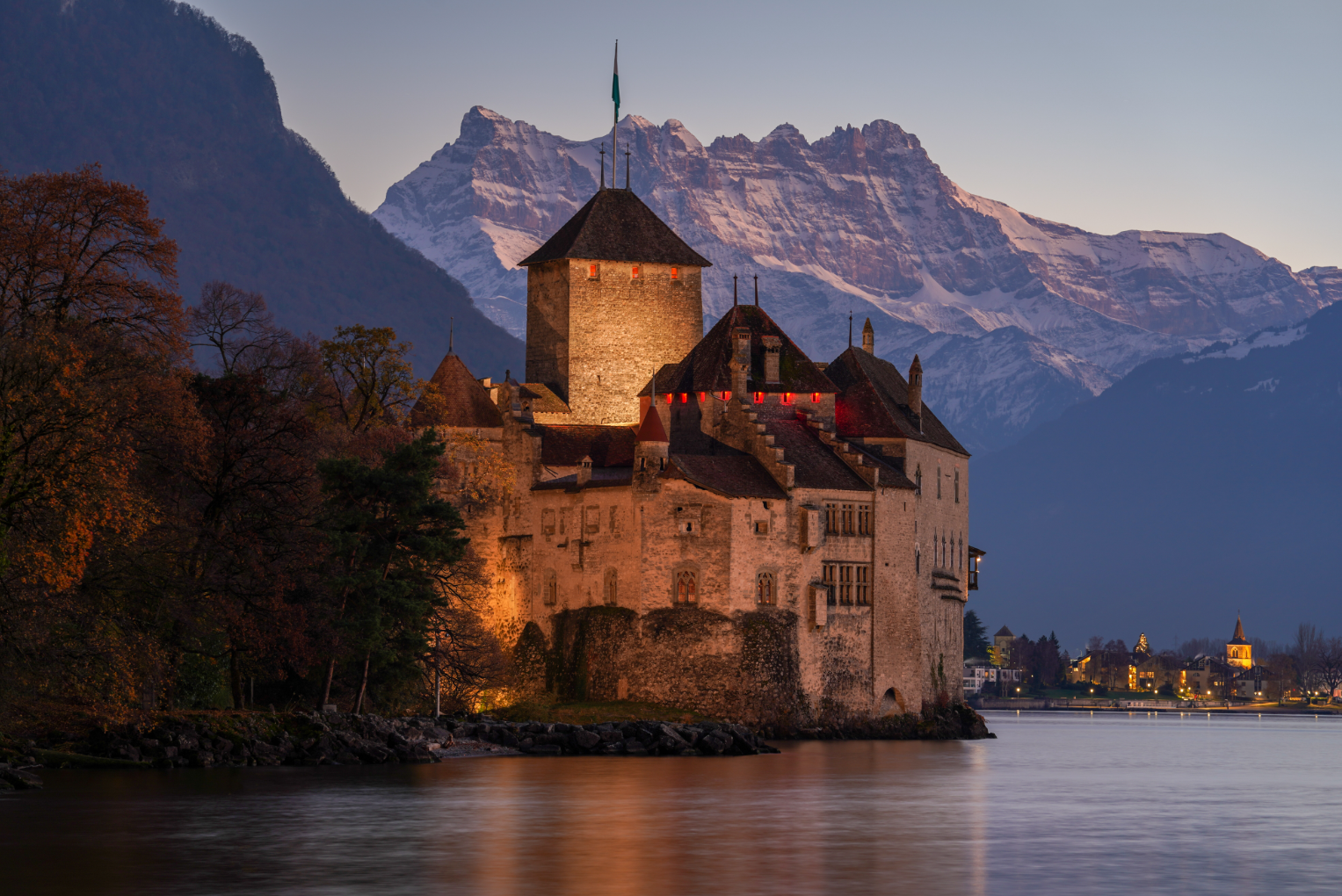
A Savoy toll station on a rock in Lake Geneva, positioned to tax everything moving between the Rhône valley and Italy. François Bonivard spent four years chained in its vaults in the 1530s until the Bernese took the castle and let him out. Byron visited in 1816, wrote The Prisoner of Chillon, and carved his own name into the pillar he believed Bonivard had been tied to. He picked the wrong pillar. Switzerland’s most-visited historic monument now protects that graffiti behind glass, which is what happens when the vandal is famous enough.
Address: Av. de Chillon 21, 1820 Veytaux, Switzerland
Trakai Island Castle, Lithuania

Kęstutis started it; his son Vytautas the Great finished it around 1409 and died inside it in 1430. By the 17th century, it was a ruin on an island in Lake Galvė, and there it might have stayed. Lithuanian architects rebuilt it between 1951 and 1961, over resistance from Moscow, which correctly read a revival of Grand Duchy history as nationalism wearing a hard hat. It’s a medieval castle rebuilt in the 1950s, which sounds like a compromise until you learn what it cost to argue for. The museum opened in 1962.
Address: Karaimų g. 43C, Trakai, 21104 Trakų r. sav., Lithuania
Scaliger Castle, Sirmione, Italy
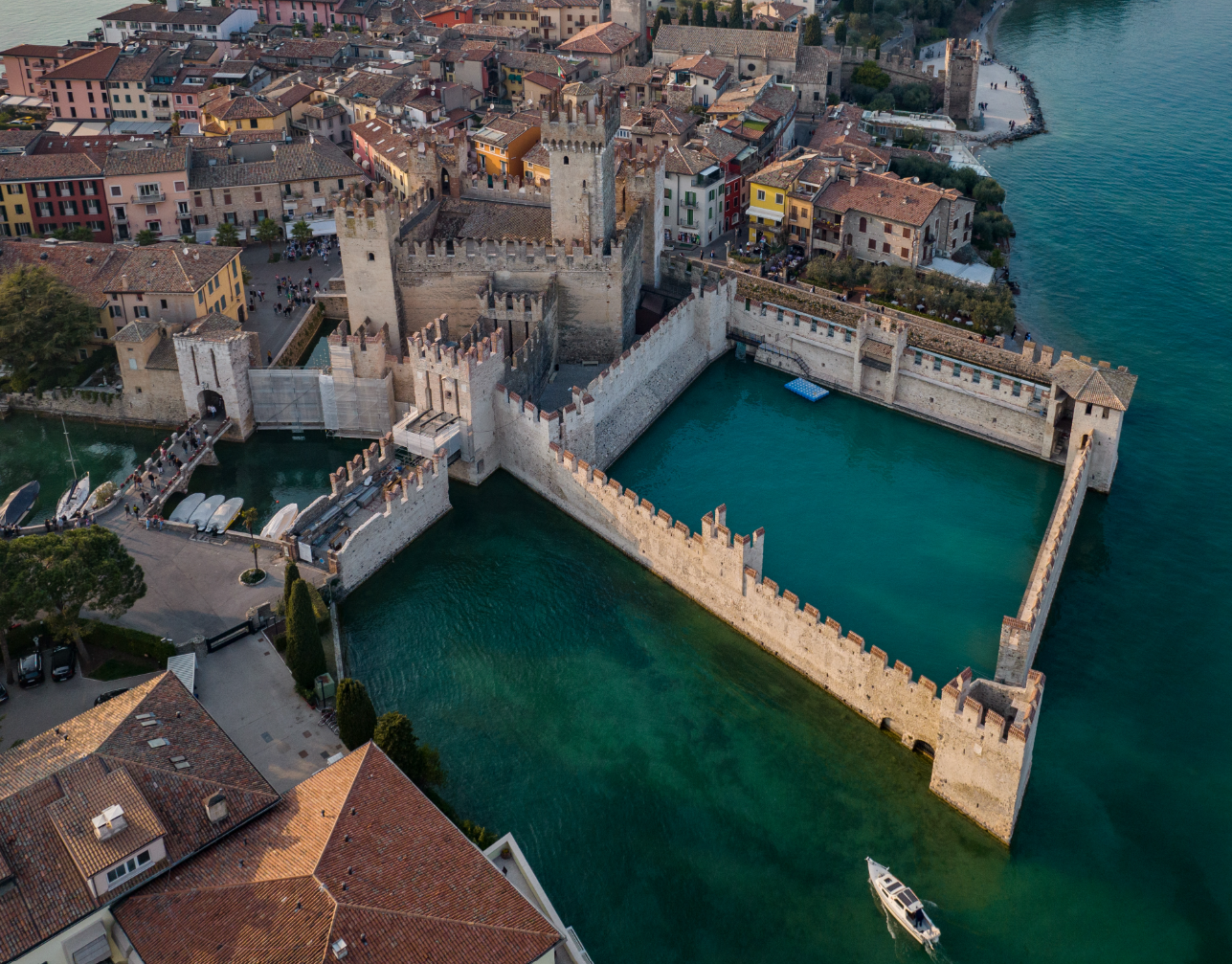
The Della Scala family of Verona built this in the second half of the 14th century on the neck of the Sirmione peninsula, and then did something almost nobody else thought of. They walled in a piece of Lake Garda. The darsena is a fortified dock, so the fleet could ride out a siege behind the battlements rather than out in the open water. Venice took it over in 1405 and further strengthened the harbor. It is one of Italy’s best-preserved castles, and the only one thought to have brought the navy indoors.
Address: P.za Castello, 34, 25019 Sirmione BS, Italy
Predjama Castle, Slovenia
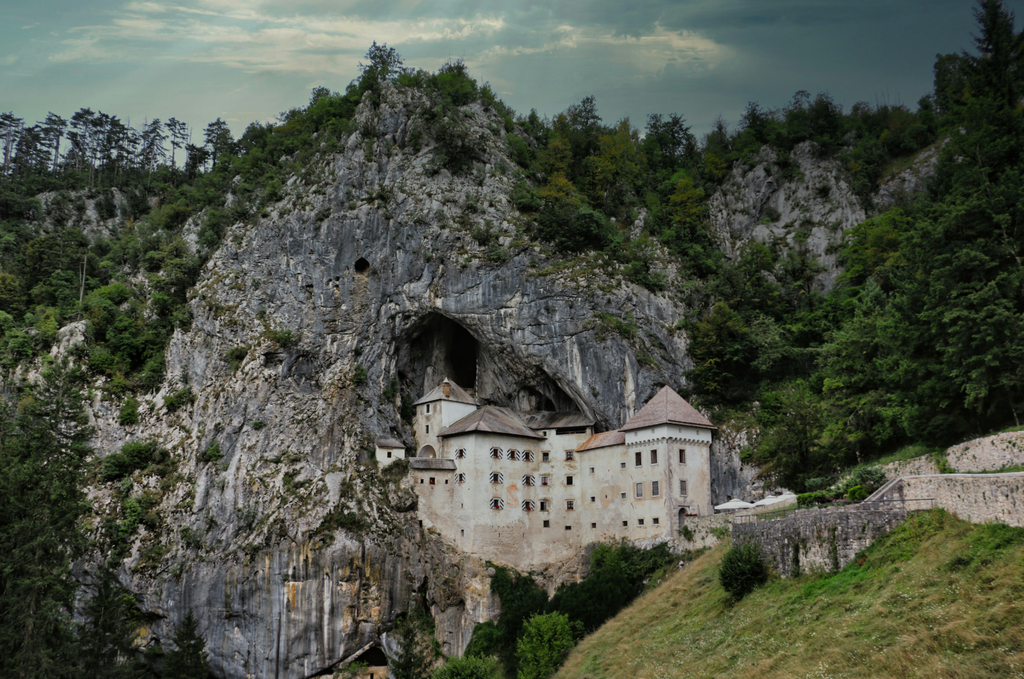
Predjama Castle stands out for being built into the mouth of a cave beneath a vertical cliff, and is recognized by Guinness World Records as the largest cave castle on earth. In the 1480s, the robber knight Erazem Lueger held out here for more than a year against imperial forces, resupplied through a tunnel in the rock, and threw fresh cherries down at the besiegers to prove he wasn’t starving. A servant took a bribe and signaled with a candle. The cannonball found Erazem in the latrine, which hung out over the drop. Europe’s finest siege defense, undone by its one room with a view.
Address: Predjama 1, 6230 Predjama, Slovenia
Belogradchik Fortress, Bulgaria

The Romans arrived between the 1st and 3rd centuries, saw red sandstone pinnacles rising 70 meters from the hillside, and found nature had built most of a fortress for them. They walled only two sides; the rest is rock. The Ottomans later rebuilt it for artillery, and from the upper citadel, fortification and landscape become almost indistinguishable.
Address: ul. “Colo Todorov” 43, 3900 Belogradchik, Bulgaria
Hochosterwitz Castle, Austria
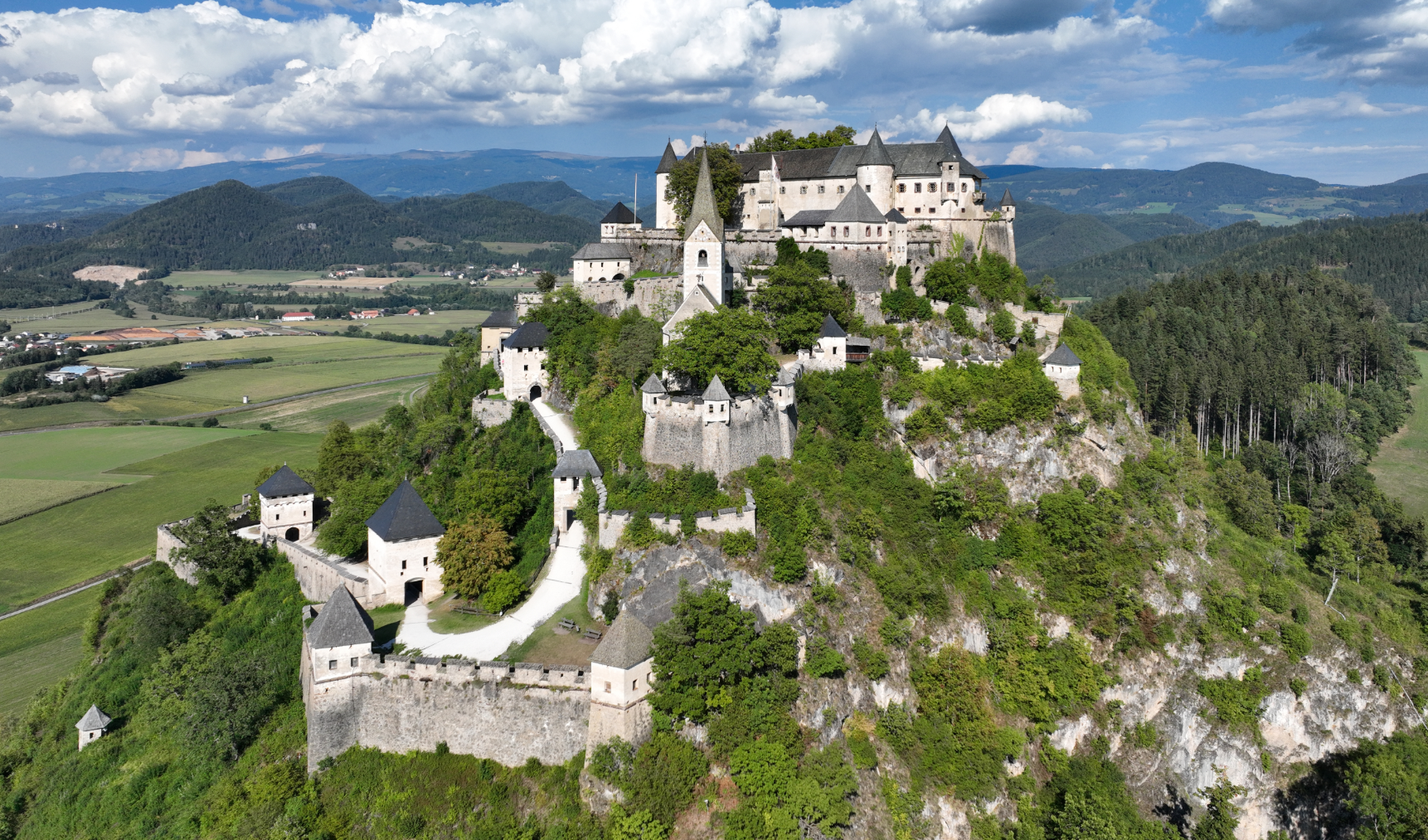
Fourteen gates, each with a different unpleasant surprise, spiralling up a limestone outcrop in Carinthia. The story everyone tells here is older than the gates. During a 14th-century siege, first written down by the chronicler Jakob Unrest and later retold by Jacob Grimm, the starving garrison killed its last ox, stuffed it with grain and heaved the carcass over the wall. The besiegers concluded the defenders had food to spare and went home. The castle has kept the gates ever since, and the memory of winning by pretending it wasn’t hungry.
Address: Hochosterwitz 1, 9314 Launsdorf, Austria
Edinburgh Castle, Scotland
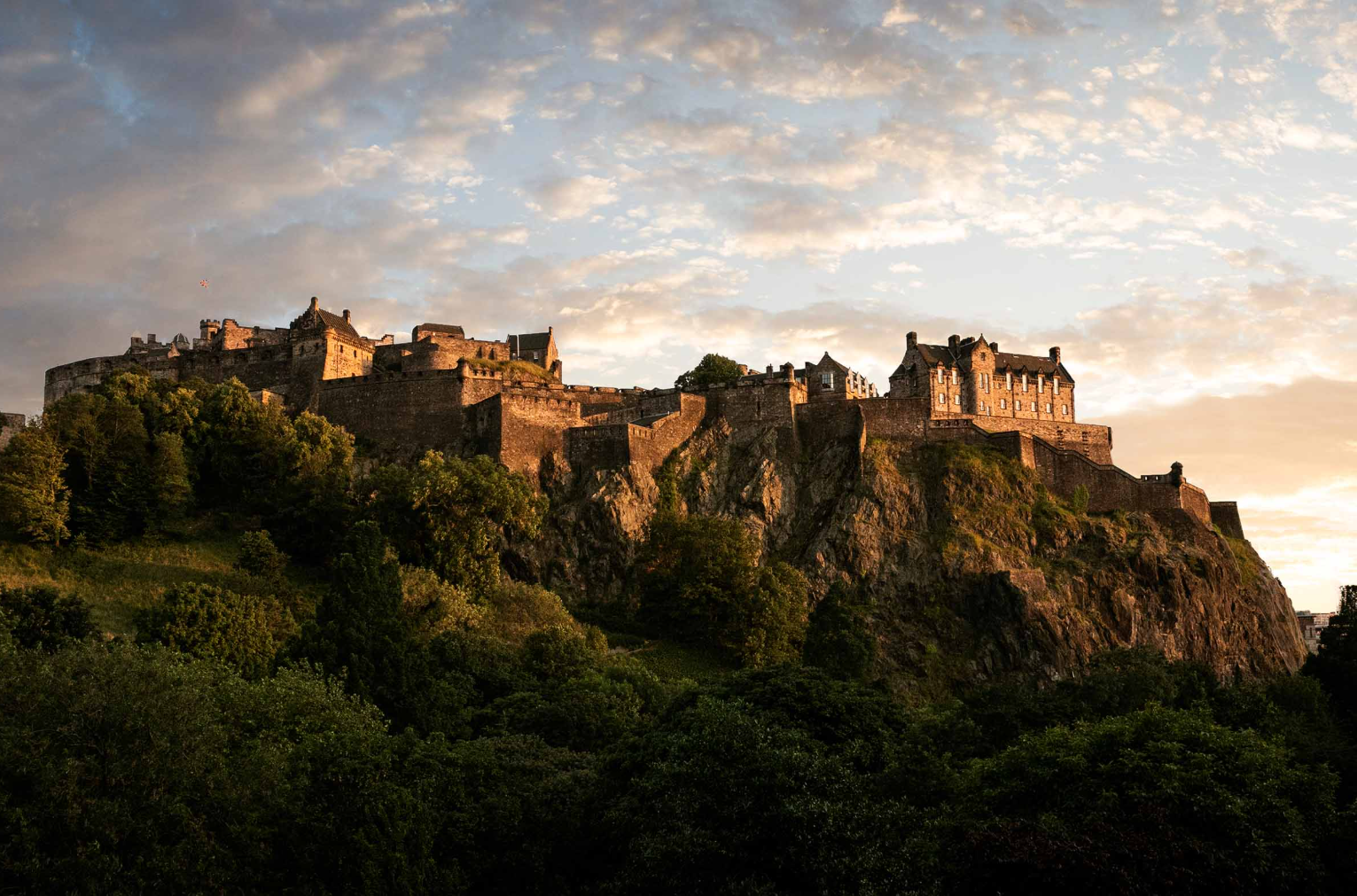
Research published in 2014 recorded 26 sieges of Edinburgh Castle, making it the most besieged place in Britain. The volcanic plug it sits on explains why anyone kept trying and why so many failed. St Margaret’s Chapel, built around 1130 and the oldest building in the city, came through it all partly because it was small enough to be overlooked and later served as a gunpowder store. The One O’Clock Gun has fired since 1861. But the detail that sticks is the Jacobite party of 1715, who brought a ladder to scale the walls and found it was too short.
Address: Castlehill, Edinburgh EH1 2NG, United Kingdom
Corvin Castle, Romania

John Hunyadi expanded an existing fortification on the site of Corvin Castle in the 1440s, and its most-visited feature is a 30-meter-deep well. Legend says three Turkish prisoners dug the well for fifteen years in exchange for freedom, only to be betrayed after Hunyadi’s death. The Arabic inscription tells a quieter story: it names Hasan and says he was a slave there. The castle keeps both versions.
Address: Strada Curtea Corvinilor 1-3, 331141 Hunedoara, Romania
Eltz Castle, Germany
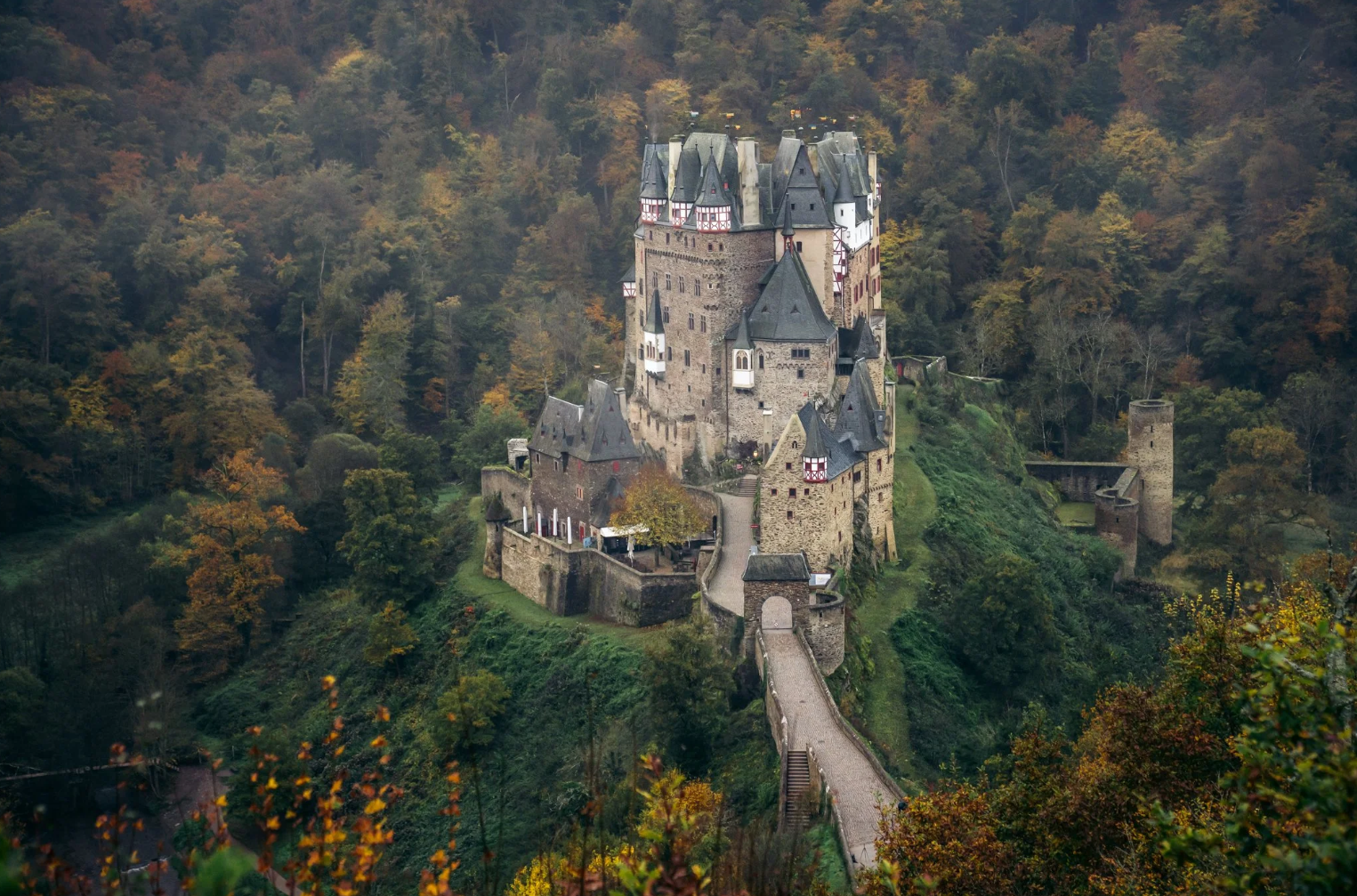
Above a bend of the Elzbach near the Moselle, Eltz has remained with the same family since 1157, now in their 33rd generation. In 1269, three branches divided the site, wrote their own constitution, and lived side by side for centuries. Eltz was never destroyed, surviving the Thirty Years’ War and French campaigns that flattened nearby Rhine castles. It even appeared on Germany’s 500-mark note. The family credits its survival to location and careful diplomacy.
Address: 56294 Wierschem, Germany
Kronborg, Denmark
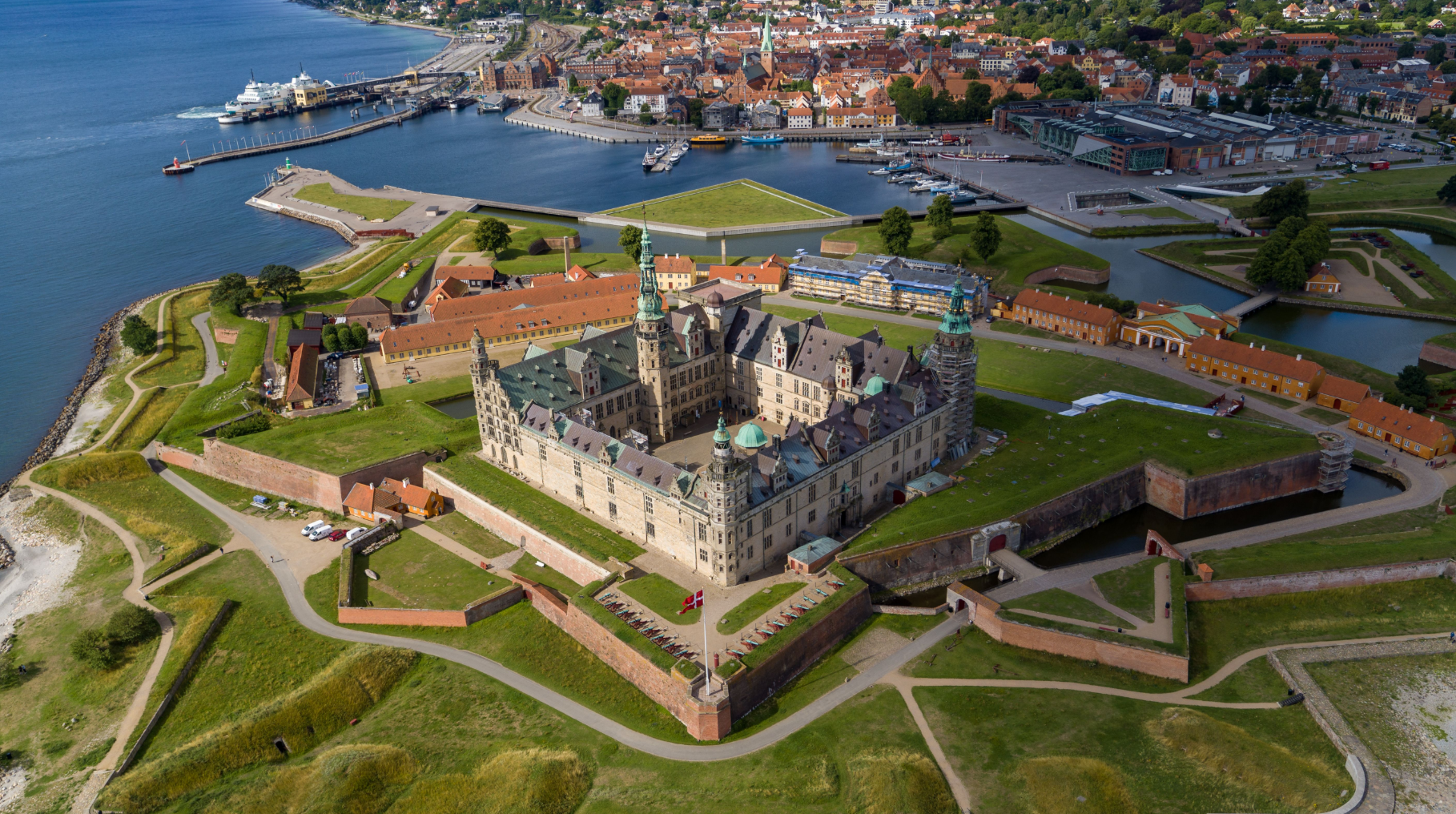
The guns here weren’t pointed at an enemy so much as at a revenue stream. Kronborg commands the narrowest point of the Øresund, and its real business was collecting the Sound Dues from ships entering the Baltic. Frederik II began rebuilding it as a Renaissance palace in 1574; it burned in 1629 and was restored. UNESCO listed it in 2000. Shakespeare set Hamlet here and almost certainly never came. The play has been performed on site since 1816, which is a long apology for an author who never showed up.
Address: Kronborg, 3000 Helsingør, Denmark
Alcázar of Segovia, Spain

It sits on a crag above the meeting point of two valleys, shaped unmistakably like the prow of a ship. On December 12, 1474, Isabella took refuge inside upon news of Henry IV’s death and was proclaimed Queen of Castile the following day, roughly where the story of modern Spain begins. The slate spires are Philip II’s idea, borrowed from Flanders. A fire gutted the interior in 1862 while it housed the Royal Artillery College, so what you see today is a careful Victorian reconstruction on a very old rock.
Address: Pl. Reina Victoria Eugenia, s/n, 40003 Segovia, Spain
Coca Castle, Spain

Everything a castle is supposed to avoid: no hill, stone, or defensible horizon. Coca sits on flat Segovian ground, built largely of brick in the mid-15th century for Alonso de Fonseca by Mudéjar craftsmen in an Islamic decorative style. It looks like confectionery, yet survived the 1521 siege and fell to Napoleon’s army in 1808.
Address: Avenida Banda de Música, 40480 Coca, Segovia, Spain
Castel del Monte, Italy

Frederick II built this on a Puglian hilltop around 1240 and left no explanation. An octagon with eight octagonal towers, eight rooms on each floor, and an octagonal courtyard, it has no moat, drawbridge, or meaningful arrow slits. Historians still debate its purpose: a hunting lodge, a treasury, a geometric statement, or something else. It became a World Heritage site in 1996 and appeared on Italy’s one-cent coin in 2002. Most castles reveal their purpose. This one refuses to.
Address: SS 170, 76123 Andria BT, Italy
Château de Chenonceau, France
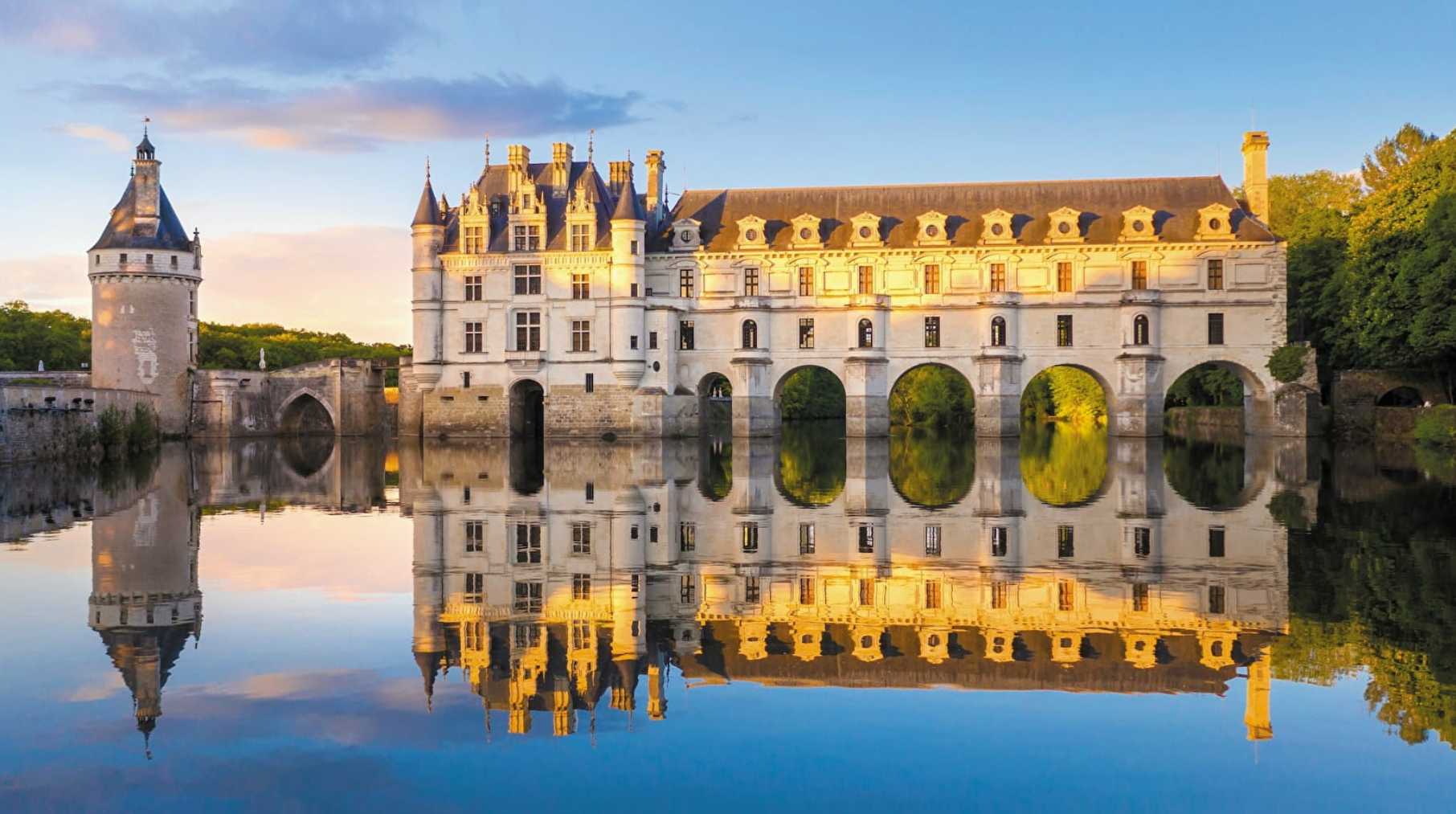
Henry II gave Chenonceau outright to Diane de Poitiers, a transfer that quietly removed it from the Crown Estate and, two centuries later, saved it from the Revolution. Catherine de’ Medici evicted her in 1559 and roofed Diane’s bridge with the great gallery. In 1914, the Menier family filled that gallery with hospital beds; more than 2,250 wounded men passed through. In 1940, the Cher became the demarcation line, and the gallery’s north door opened into occupied France while its south door opened into the free zone. A ballroom that became a border crossing.
Address: 37150 Chenonceaux, France
Château de Pierrefonds, France

Louis d’Orléans built the original in 1397. Richelieu dismantled it in 1617, leaving a picturesque ruin for two centuries. Napoleon III commissioned Viollet-le-Duc in 1857, who created not so much a restoration as an idealized castle, more complete than the original ever was. In the Salle des Preuses, he even gave the sculpted figures the faces of Empress Eugénie and her court. The empire fell before anyone moved in.
Address: Rue Viollet le Duc, 60350 Pierrefonds, France
Neuschwanstein, Germany
Begun in 1869 on a rocky spur above the village of Hohenschwangau, Neuschwanstein was conceived as a private retreat for Ludwig II and a tribute to Richard Wagner, drawing on the Wartburg, Versailles, German fairy tales, and Wagner’s operas. It was never finished. Ludwig died in 1886, and the palace opened to the public shortly afterward; it now receives around 1.4 million visitors a year.

On July 12, 2025, UNESCO inscribed it, along with Linderhof, Schachen, and Herrenchiemsee, Germany’s fifty-fifth World Heritage site. Disneyland’s Sleeping Beauty Castle opened on 17 July 1955, and by Walt Disney’s own account, the plan was “to base it on King Ludwig’s Bavarian castle.” A hiding place that became everybody’s idea of a castle.
Address: Neuschwansteinstraße 20, 87645 Schwangau, Germany
Hohenzollern Castle, Germany
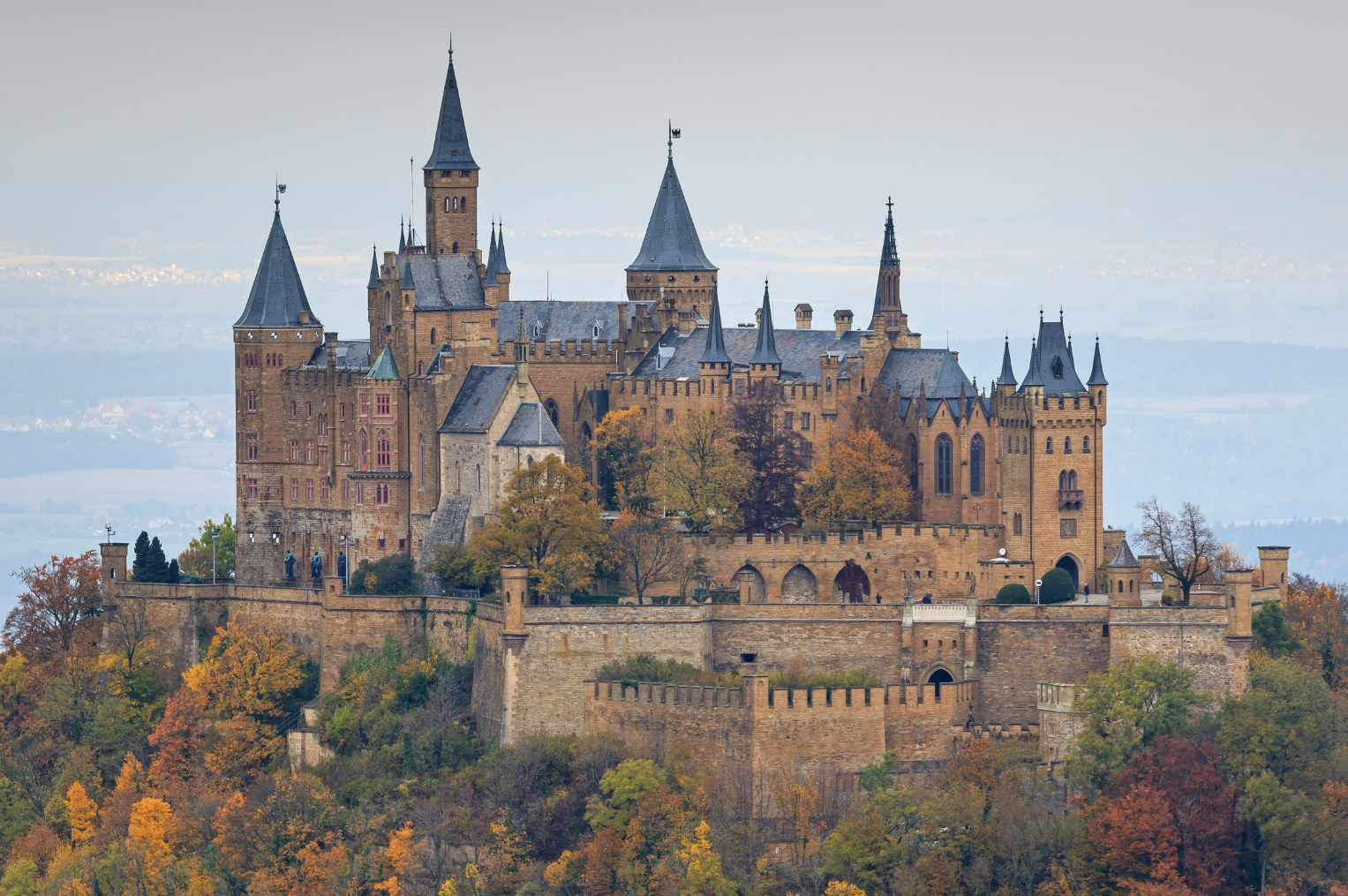
The third castle on this hill. The first fell in 1423 after a ten-month siege, proving the site once mattered. This one didn’t need to: Frederick William IV commissioned it in 1850 as a Hohenzollern memorial, designed by Friedrich August Stüler. No Hohenzollern lived here permanently. Wilhelm I inaugurated it in 1867, after which 92,000 beeches were planted on the bare slope, completing the view.
Address: 72379 Burg Hohenzollern, Germany
Château de Versailles, France
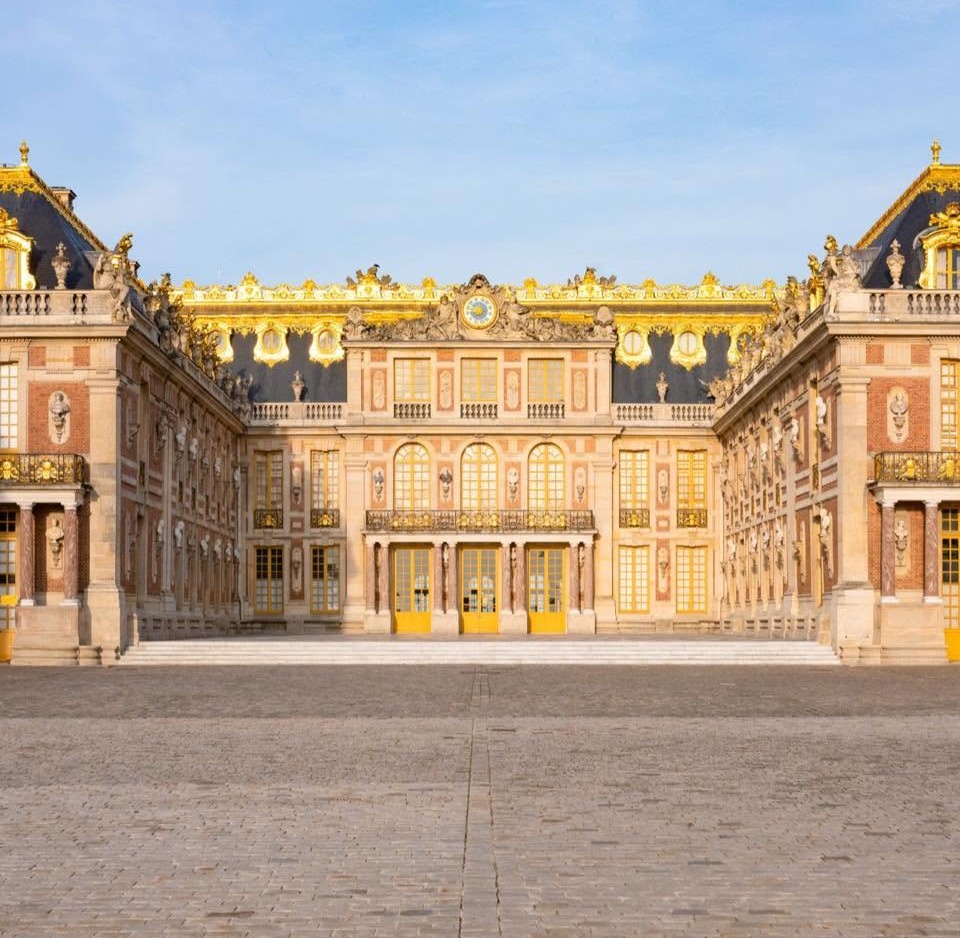
No walls, no moat, no keep, just the most effective defensive system on this list. Louis XIV had fled Paris as a child during the Fronde and never trusted the city or his own nobility again. His answer wasn’t fortification; it was proximity: move the court out to his father’s hunting lodge, hand the aristocracy bedrooms, and make them compete for the privilege of passing him his shirt. Around 5,000 people moved in from 1682. It worked for 107 years, which is longer than most curtain walls last.
Address: Place d’Armes, 78000 Versailles, France
What the Walls Were For
Put these twenty European castles up in sequence, and they tell you something. The oldest use what was already there: a tide, a cliff, a lake, a cave. The middle ones are proud: brick, gates, geometry. The last ones are more honest about the danger having passed, built to resemble the castles of those who once faced it. Neuschwanstein is a stage set, and still worth the queue.
%20(1)%20(1).png)
What stays with you is how local the fear once was. Every single one of them was built by people who knew exactly who might come over the next hill. Those frontiers are borders now, crossed in an afternoon by train, with a book. So take the long way up. Walk the causeway instead of the boat, the fourteen gates instead of the lift. A castle makes most sense at the speed it was built to be approached.
