




Every book published in Portugal has a second address, more than 7,000 kilometers (4,000 miles) from Lisbon. Under the country’s legal-deposit rules, a copy of each one crosses the Atlantic to a library on a side street in downtown Rio de Janeiro, the Royal Portuguese Reading Room. It was founded in 1837 by 43 Portuguese immigrants who feared their language would fade on a continent where they had become foreigners. Today, it holds 350,000 volumes, and anyone can walk in for free.
That instinct, to keep books where people can reach them, is what UNESCO rewards when it names a City of Literature, a title invented in Edinburgh in 2004 and now held by more than fifty cities. Six of them are in the Americas, across five countries and four languages, and this guide dives into one city for each of four languages.
Rio, where the immigrants’ library still stands. Québec City, where a former jail and church face each other across a lane, one now a library and the other a house for writers. Seattle, whose central library was designed only after its architect had asked Microsoft and Amazon whether the printed book had a future. And Montevideo, where the city’s most loved writer’s café table is still kept for him. Each is a place that could have let a piece of its literary culture go, and instead chose to keep it.
Rio de Janeiro, Brazil
The most beautiful room in Brazilian letters, in the city that became World Book Capital.
The Real Gabinete Português de Leitura, the Royal Portuguese Reading Room, sits on Rua Luís de Camões, a few minutes’ walk from the noise of Praça Tiradentes, and nothing on the street prepares you for it. The neo-Manueline façade was carved from Lisbon limestone, shipped across the Atlantic and assembled between 1880 and 1887. Statues of the poet Camões, the navigators Vasco da Gama and Cabral, and Prince Henry the Navigator were erected to stand guard outside.
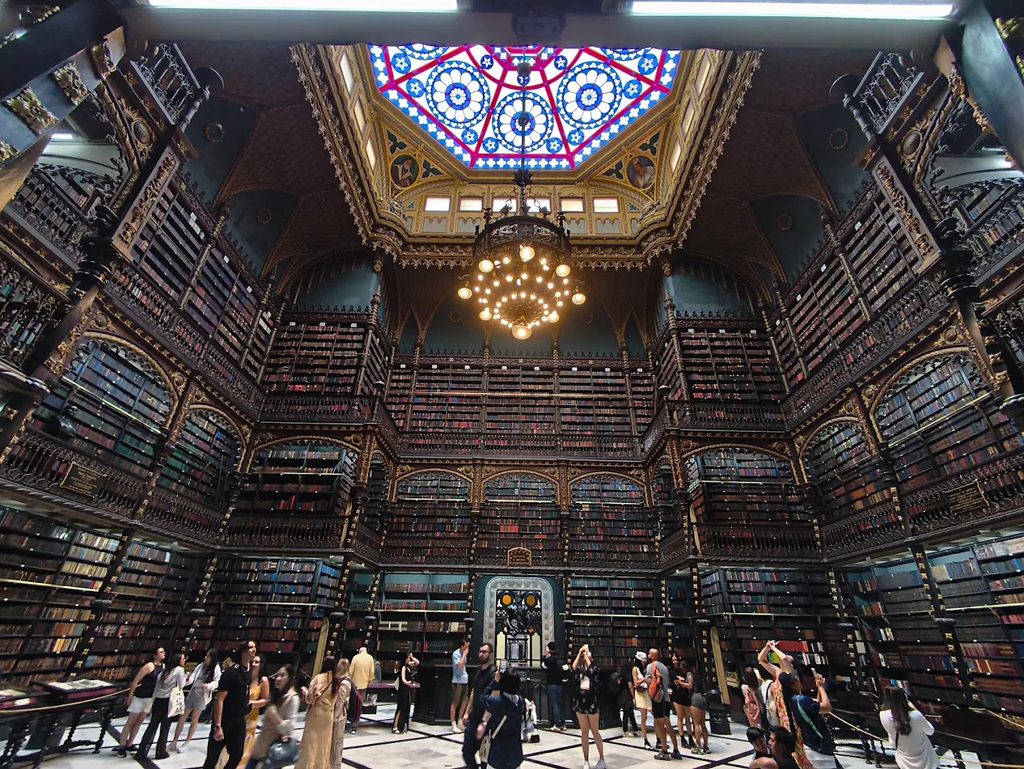
Inside, the reading room rises through three stories of carved wood to a stained-glass skylight. The shelves lining the room hold some 350,000 volumes, among them a first edition of Camões’s national epic Os Lusíadas from 1572. When Brazil founded its Academy of Letters in 1897, it did not yet have its own building; so, its first five formal sessions were held here, presided over by the novelist Machado de Assis. Admission to the reading room is free, and you can sit inside for ten minutes—the traffic muted behind the doors and the skylight colouring the pages.
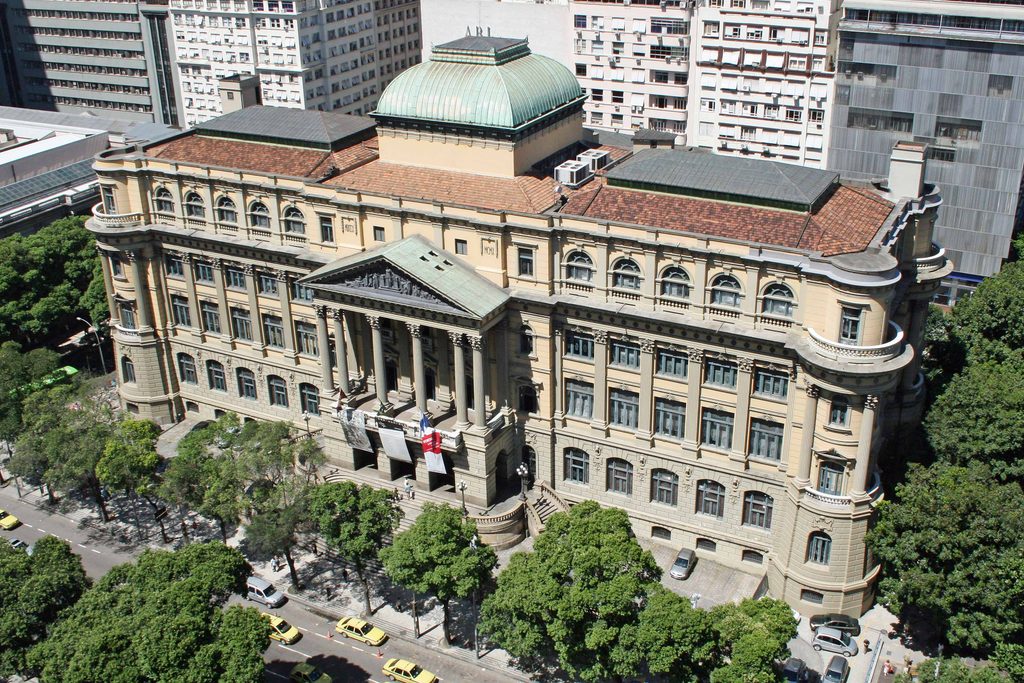
Rio’s other great library is a matter of scale. The Biblioteca Nacional, founded in 1810 after the Portuguese court fled Napoleon and arrived in Rio with its books, holds around nine million items and is the largest library in Latin America. And that’s to say nothing of the city’s festivals, which are as grand as its reading life: the Bienal do Livro drew more than 600,000 visitors in 2023, who bought some 5.5 million books between them.
UNESCO added Rio to its Cities of Literature network in 2023 and in 2025 named it World Book Capital, the first Portuguese-speaking city to hold the title. It’s one built on a foundation of immigrants feeling homesick, a legacy that grew into a bustling library and a city that loves literature.
Québec City, Canada
The first French-speaking City of Literature, and a former church you can write in.
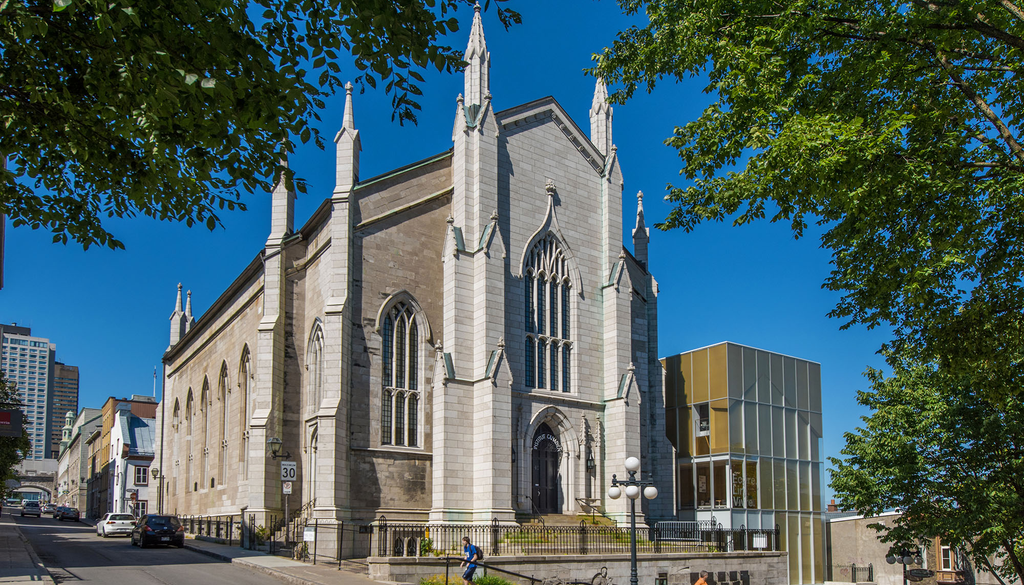
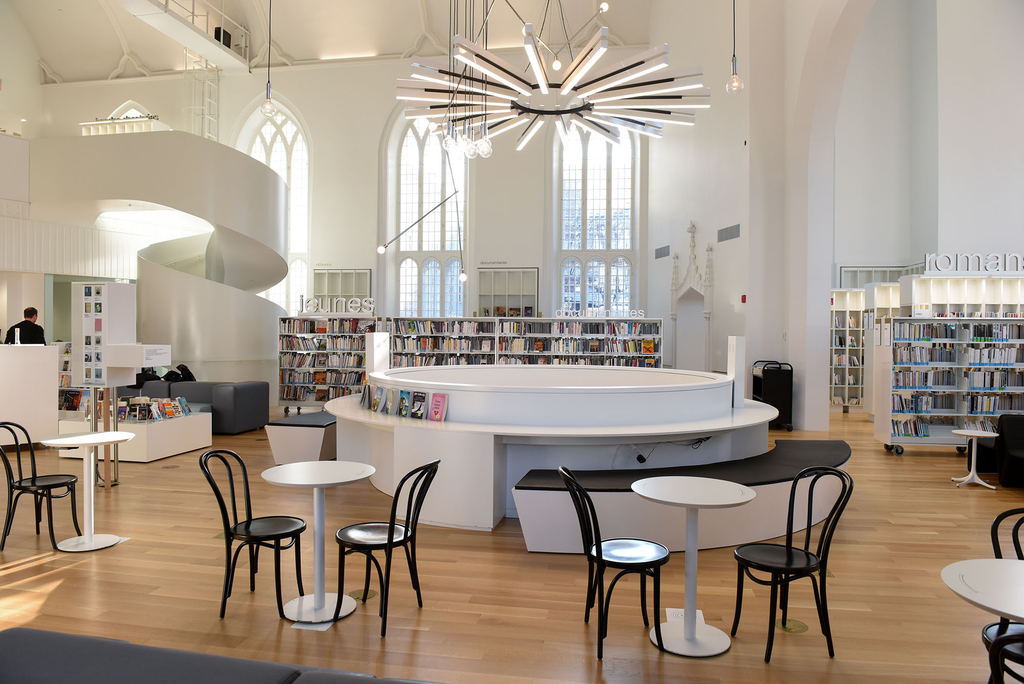
On the chaussée des Écossais in Old Québec, two buildings face each other across a narrow street and tell the city’s story between them. One, the Maison de la littérature, occupies the former Wesley Temple, a Methodist church built in 1848. The congregation left in 1931, and the building spent decades as a public library. Then, in 2015, the city gutted and reimagined it. The interior is now white from floor to vault, possessing a lending library, a small literary stage, a comics workshop, and a set of cabinets d’écriture—glass-walled writing rooms anyone can book. Writers in residence live upstairs.
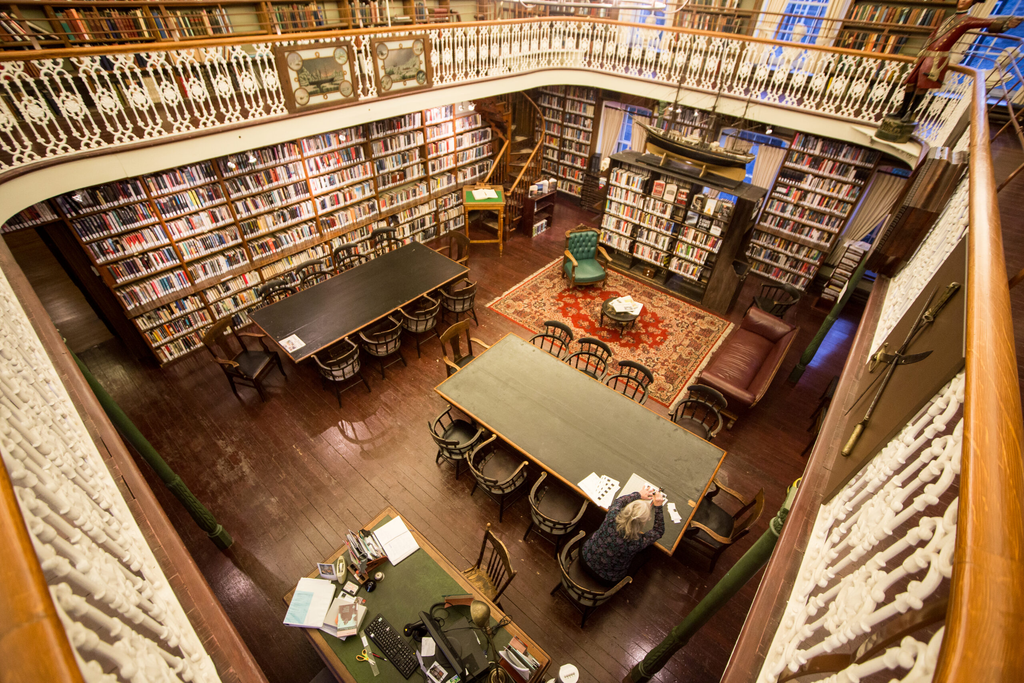
Across the street, the Morrin Centre began life as the city’s common gaol, built between 1808 and 1813, and prisoners’ graffiti is still carved into the floorboards of the cells. Since 1868, the building has housed the English-language library of the Literary and Historical Society of Quebec, founded in 1824 and the oldest surviving learned society in Canada.
Those two buildings aren’t the only secret behind Québec’s literary culture. Another is Librairie Pantoute, the city’s leading independent bookshop since 1972.

UNESCO designated Québec as the first French-speaking City of Literature on October 31, 2017. Once you stand between the two aforementioned buildings yourself on a winter afternoon, the reason will become plain. One side of the street turned a jail into a library. The other turned a church into a place to write. Neither seemed to find this remarkable.
Seattle, USA
A library designed for the persistence of the book against the digital age, in a city that believed in the power of the written word.
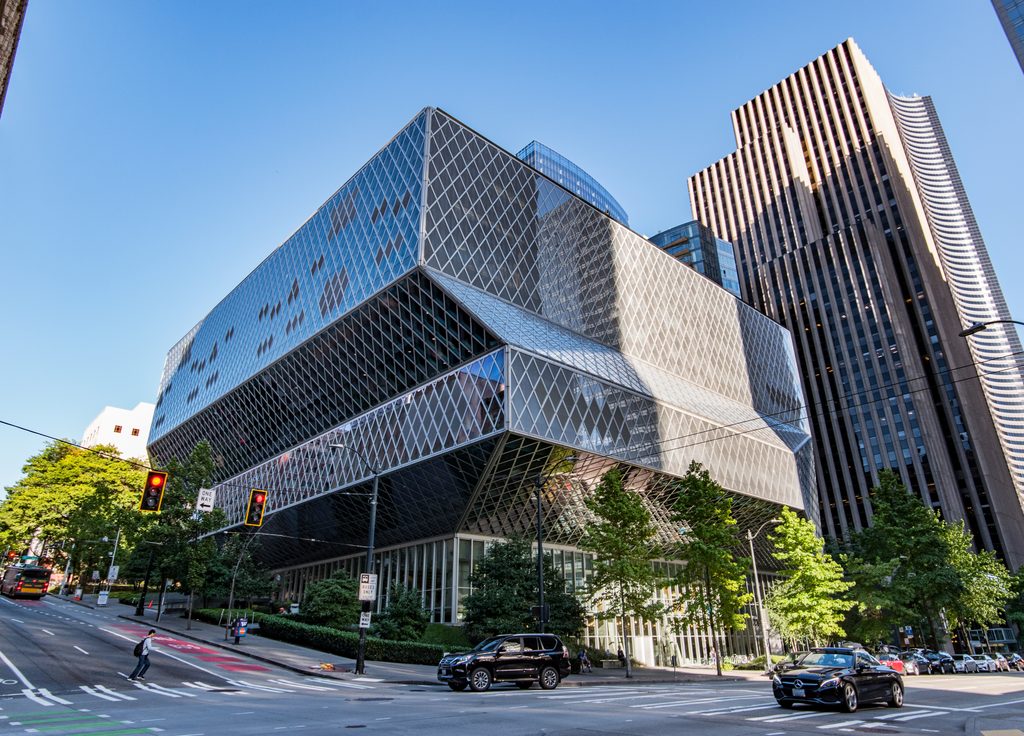
Before Rem Koolhaas designed Seattle’s Central Library, his team went to Microsoft, Amazon, and others to ask whether the printed book had a future. The answer he built, which opened in May 2004 after voters approved a “Libraries for All” bond in 1998, is the Books Spiral: the entire non-fiction collection shelved along one continuous, gently sloping ramp from the sixth floor to the ninth, running from Dewey 000 to 999 without a stair or lift to break the sequence. It held 780,000 books on opening day, with room to grow to 1.45 million without adding a shelf. You can walk from computer science to world history to poetry without climbing a single step.
.png)
Up the hill, Elliott Bay Book Company has been the city’s bookish heart since Walter Carr opened it in Pioneer Square in 1973, hiring laid-off Boeing carpenters to build the shelves and adding one of the country’s first bookstore cafés in 1979. When it moved to Capitol Hill in 2010 into a former early-1900s Ford truck-repair garage, the old cedar shelving came too. Since 2022, the shop has belonged to three longtime staff members.
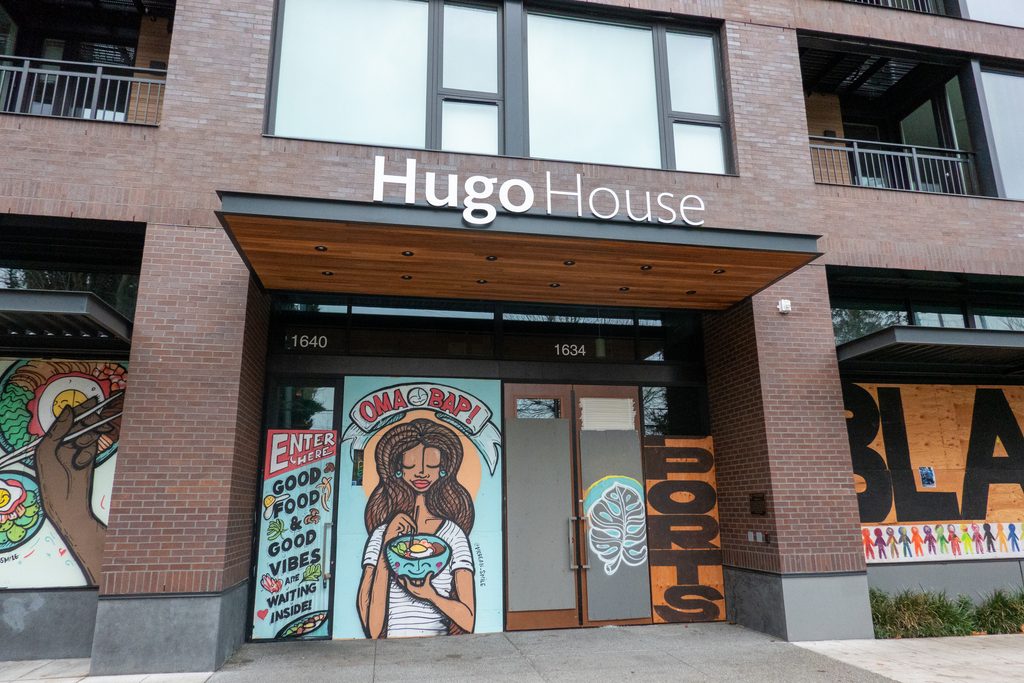
A few blocks away, Hugo House has run classes and readings since 1998, named for Richard Hugo, the poet of overlooked places. Seattle’s UNESCO designation came on October 31, 2017, the same day as Québec’s, after an earlier bid had failed. This is a city that is home to the two companies most often blamed for the death of the book, and it answered with a glass library shaped like a stack of open pages.
Montevideo, Uruguay
Latin America’s first City of Literature, where the cafés are the archive.
On Ituzaingó in the Ciudad Vieja, the old town, Café Brasilero has been pouring coffee since 1877, the oldest café in the city and one the municipality has declared of cultural interest. The novelist Juan Carlos Onetti drank here; the poets Mario Benedetti and Idea Vilariño were regulars. For more than twenty years, Eduardo Galeano, the writer of Open Veins of Latin America, took the same table by the window, to the right of the door, reading the paper back to front, and his photograph now hangs beside it. The Thonet chairs and bronze fittings haven’t changed. Neither, on a weekday morning, has an abundance of clientele: half the tables hold newspapers or paperbacks.
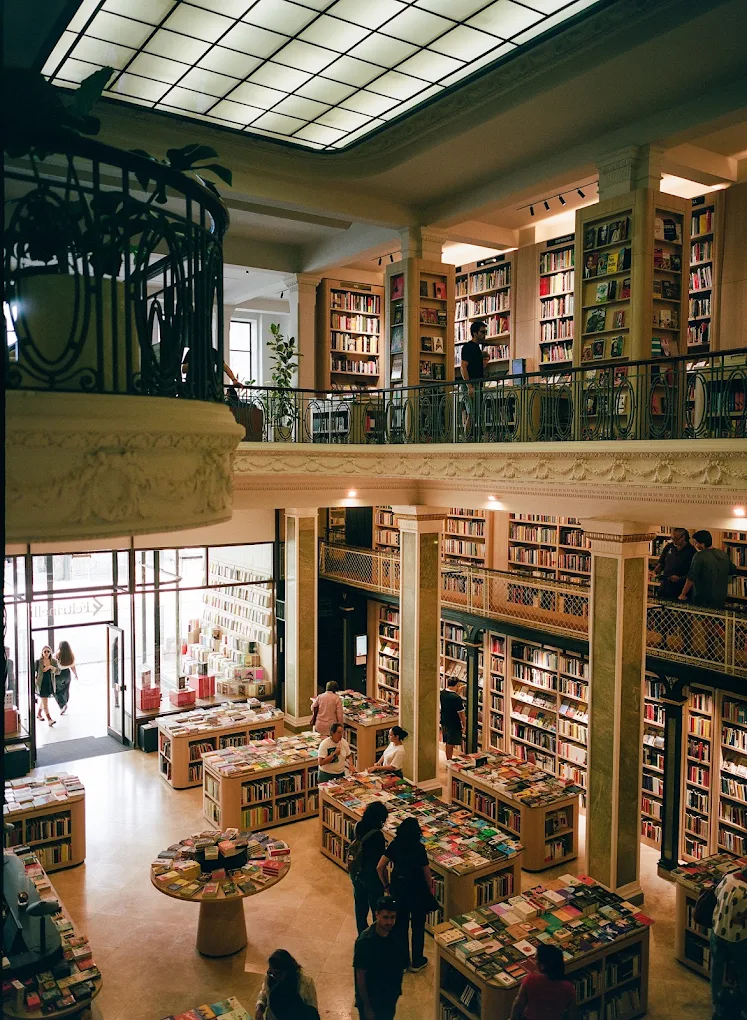
On December 11, 2015, Montevideo was the first city in Latin America to join UNESCO’s literature network, and its bookshops are as historic as its cafés. On the pedestrianised Sarandí stands the Pablo Ferrando building of 1917. It was built as the country’s first optical institute and holds a marble staircase, a great stained-glass window, and the oldest working lift in Uruguay. It housed the bookshop Más Puro Verso for 15 years. In February 2026, it reopened as Feltrinelli, the Italian bookstore chain’s first shop outside Europe, restored down to the skylight and stocked with 60,000 titles. The poet Ida Vitale, aged 102, was guest of honor.

If you’re visiting, be sure to come on a Sunday, when the Feria de Tristán Narvaja spills through the Cordón district as it has since October 3, 1909: fruit, antiques, puppies, and table after table of secondhand books beneath the plane trees. Montevideo keeps table after table, preserved for the writers who patronized those cafes, holding secondhand books that cost almost nothing, spine-cracked from years of patient readers, margins filled with the thoughts of people who came before.
Where Reading Is Simply What People Do
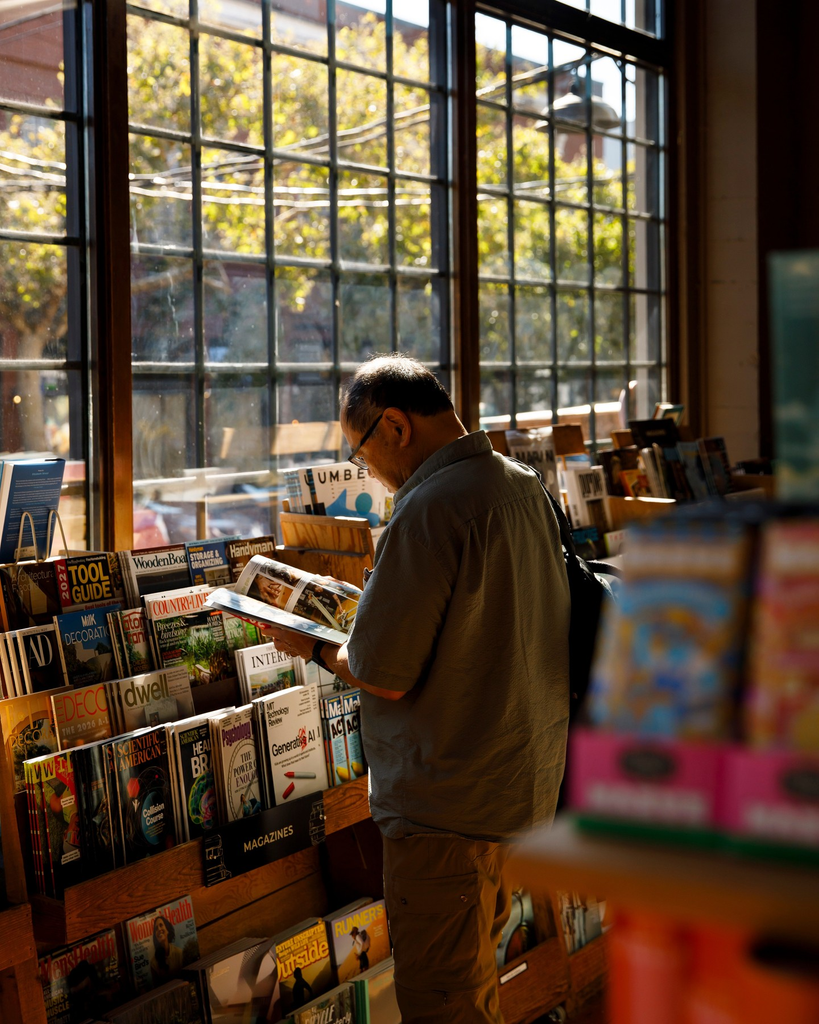
What makes these four cities special is how little of their literary life is kept behind glass. In Rio, 600,000 people went to the Bienal in 2023 and left carrying, on average, nine books each, and the most beautiful reading room in the country is free and busy on a Tuesday. In Québec City, anyone can book a glass-walled writing room in a former church, and the library above the old cells has been lending books since 1868. In Seattle, the voters paid for their library themselves, and on any afternoon, the Books Spiral has people reading in it who came in for something else. In Montevideo, the city’s literature is in full bloom everywhere: mobile libraries sent out to its parks and its beach in summer, the Sunday market selling secondhand books beneath the plane trees since 1909.

That is what UNESCO’s title recognises: cities where literature belongs to the ordinary week, to the commuter, the pensioner and the student as much as to the writer. The buildings are extraordinary and the reading rooms are among the loveliest in the world, and the deeper pleasure for a travelling reader is quieter than either. It is arriving somewhere and discovering that the thing you love is ordinary there, done by everyone, and that a seat has been kept for you.
